
This guide is maintained as a current resource for September 2026 and covers only the laws of England and Wales. Information is for general guidance, not legal advice. Consult a qualified solicitor for advice specific to your situation.
Learn what happens in England and Wales if bail conditions are broken before trial, including powers of arrest, court review of bail, possible remand in custody, variations to conditions and wider legal consequences.
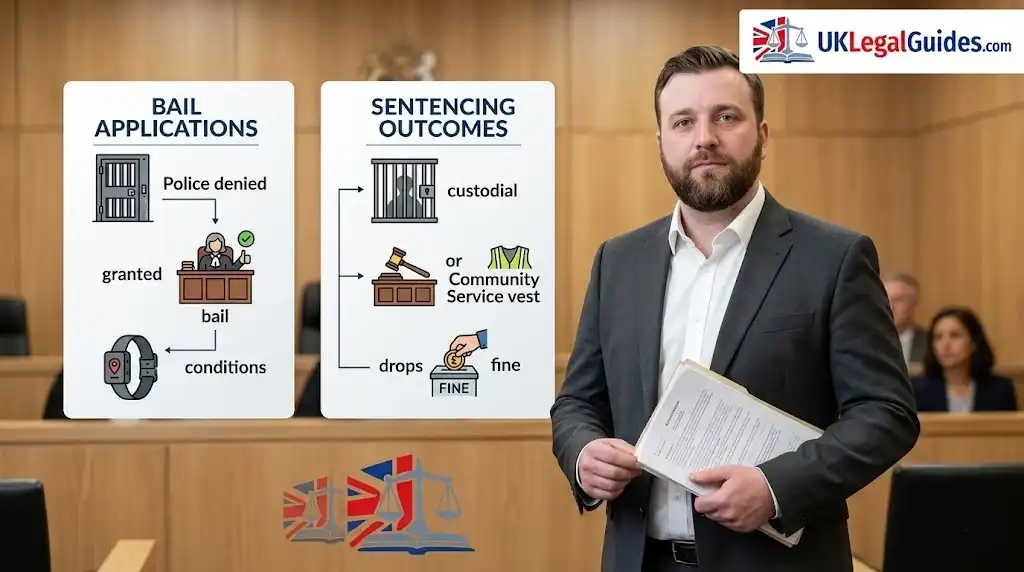
Bail is a legal mechanism that allows someone charged with a criminal offence in England and Wales to be released from custody while they wait for their trial or next hearing. It is often granted with specific conditions, such as residing at a particular address, reporting regularly to a police station, surrendering a passport or avoiding contact with certain individuals. These conditions are intended to ensure the defendant:
- Surrenders to custody for court hearings;
- Does not commit further offences;
- Does not interfere with witnesses, victims or the course of justice.
When these bail conditions are not complied with, the legal system has several enforcement tools. This article explains what happens if bail conditions are broken before trial, how breaches are dealt with by the police and courts, and the possible consequences for defendants.
Types of Bail and When Conditions Apply
Bail in England and Wales can be granted at different stages of the criminal process:
- Police bail (pre‑charge or post‑charge) – The police release a suspect before or after charging them, often with conditions to manage risk and attendance.
- Court bail – A court grants bail following an initial hearing after charge, setting conditions until trial.
Conditions might include reporting to a police station at fixed times, staying at a particular address, avoiding contact with named people, or surrendering travel documents.
What Constitutes a Breakdown of Bail Conditions
A breach of bail conditions happens when a person:
- Fails to attend a police station or court as required;
- Breaks a specific restriction, such as contacting someone they are prohibited from contacting, travelling outside set areas, or ignoring reporting times;
- Fails to surrender their passport when this was a condition.
Importantly, breach of bail conditions is not automatically a separate criminal offence in itself under UK law. Instead, breach triggers legal processes designed to reassess bail and enforce compliance.
Police Powers on Suspected Breach
Arrest Without a Warrant
If the police have reasonable grounds to believe that a defendant has breached bail conditions, they may arrest that person without a warrant. This power applies whether bail was imposed by the police or by a court.
After arrest, the defendant is normally taken into custody and must be brought before a magistrates' court as soon as practicable (typically within 24 hours) so a court can decide what should happen next.
Pre‑Charge Bail and Breaches
For pre‑charge police bail (before someone is charged), a breach is not itself a criminal offence. The police can arrest the person if they suspect a breach and then decide whether to:
- Charge the person with the original offence, if there is now sufficient evidence;
- Release them again on bail (often with the same conditions still in place); or
- Release them without bail if pre‑conditions are not met.
Whether breach of pre‑charge conditions leads to any further action often depends on how serious the breach is and whether other offences have been committed.
Court Handling of Bail Breaches
Once someone is charged and on court bail, the court has more direct involvement in deciding how a breach is handled:
Bail Review Hearing
The person arrested for breaching bail conditions is brought before a magistrates' court, where the judge or magistrates will:
- Review whether bail should continue;
- Decide whether to grant bail again, with the same or amended conditions;
- Or refuse bail, resulting in remand in custody until trial.
The court's decision is influenced by factors such as the seriousness of the breach, the risk of further breaches, and whether the defendant can be trusted to comply with future conditions.
Remand in Custody
If the court determines that the defendant is likely to break bail again, is a flight risk, or presents a danger to the public, it may refuse to grant bail. In that case, the person will be remanded in custody and remain in prison until the next hearing or trial.
Stricter or Modified Conditions
If bail is continued after a breach, the court may:
- Tighten existing conditions (for example, adding electronic monitoring or curfew requirements),
- Add new conditions to address risks identified by the court, or
- Increase reporting frequency.
Consequences Beyond Bail Review
Impact on Future Bail Decisions
A breach can make it less likely that bail will be granted again, especially if it suggests the defendant is not reliable or poses a risk of reoffending.
Separate Criminal Offences
While breaking bail conditions on its own is not a separate criminal offence under the Bail Act 1976, failing to surrender to custody when required to attend court is a criminal offence and may result in further charges, a fine or imprisonment.
Additionally,-related conduct during a breach might amount to other offences, such as harassment or contempt of court.
Evidence and Sentencing Implications
A defendant's behaviour while on bail, including any breaches, may be considered during sentencing if they are later convicted of the original offence. Poor compliance can be treated as an aggravating factor.
Practical Example
Imagine a defendant released on bail with a condition not to contact a witness. If they message that witness, the police may arrest them. At the next court appearance, the magistrates might refuse further bail and order custody, or they might continue bail but impose stricter conditions such as regular reporting or tagging. The judge will assess whether the person is likely to comply in future and whether public protection requires custody. (Illustrative based on legal practice.)
Key Takeaways
Breaking bail conditions in England and Wales triggers a structured legal response focused on enforcement and public protection. The police can arrest someone suspected of a breach, and courts will then review bail at the next hearing. Consequences range from continued bail with new conditions to refusal of bail and remand in custody. While a breach itself is not usually a separate offence, failing to surrender to court or committing other related offences can carry additional penalties. The process emphasises compliance, safety, and the integrity of the criminal justice system.
