
This guide is maintained as a current resource for September 2026 and covers only the laws of England and Wales. Information is for general guidance, not legal advice. Consult a qualified solicitor for advice specific to your situation.
Find out how bail can be revoked by the court in England and Wales, including the legal powers under the Bail Act 1976, reasons for revocation, the court process, and what happens next for defendants.
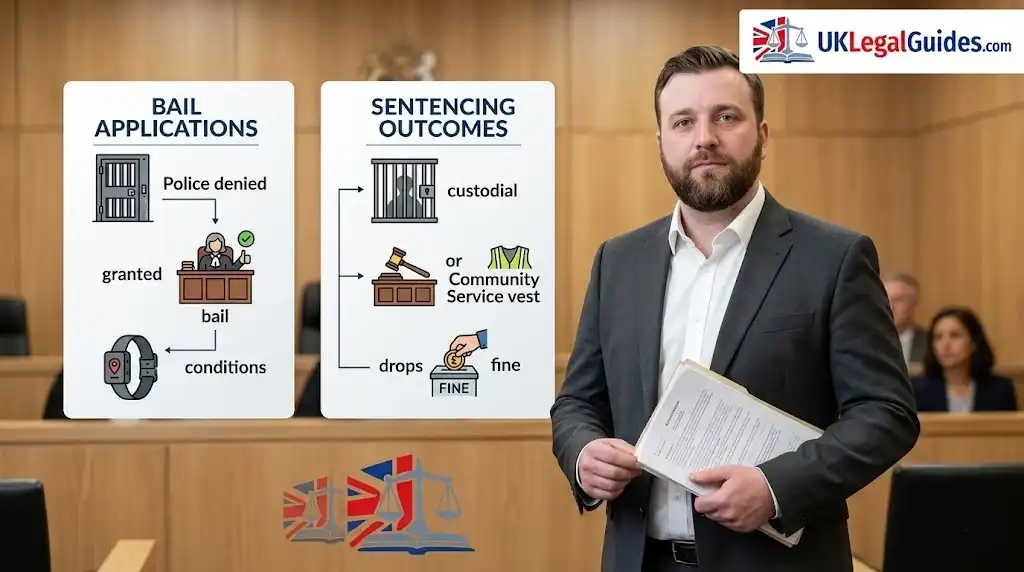
When someone is released on bail while awaiting trial or another court appearance in England and Wales, the bail arrangement can be revoked by a court. Revocation means that the court withdraws the existing bail and typically remands the defendant in custody, pending further proceedings. This article explains, in clear and accessible terms, what bail revocation means, how it happens, the legal powers involved, and what the practical consequences are for defendants.
What Bail Is and Why It Matters
Bail allows a person charged with a criminal offence or awaiting a court hearing to be released from custody until that hearing, subject to giving a promise (sometimes with money as security) and agreeing to certain conditions. Conditions may include:
- Living at a specified address;
- Not contacting certain people;
- Reporting regularly to a police station; or
- Surrendering a passport.
These measures help ensure that the defendant attends court and does not interfere with the investigation or pose risks such as reoffending or witness intimidation.
Legal Basis for Bail and Its Revocation
The primary statutory framework for bail in England and Wales is the Bail Act 1976. This Act sets out when bail must be granted, conditions that can be imposed, and how bail applications are reviewed. It also provides mechanisms by which bail can be reconsidered or revoked.
Under Section 5B of the Bail Act 1976, prosecutors can apply to a magistrates' court to reconsider bail that has already been granted. This includes the power to:
- Vary the conditions of bail;
- Impose conditions where none were previously set; or
- Revoke bail entirely, leading to remand in custody.
This application must be based on material information that was not available when bail was originally granted.
Court Power to Revoke Bail
1. Application by the Prosecutor
If new evidence or information comes to light after bail is granted - for example, evidence that a defendant poses a risk of absconding, interfering with witnesses, or reoffending - the prosecution can apply to the court to withdraw bail. The Bail Act 1976 expressly allows the court to reconsider bail when fresh material is presented.
2. Arrest for Breach and Court Review
Police may arrest a defendant under Section 7 of the Bail Act 1976 if they have reasonable grounds to believe a bail condition has been breached or is likely to be breached. Once arrested, the defendant must be brought before a magistrates' court, which will:
- Review whether bail should continue;
- Decide whether to revise the conditions; or
- Decide whether to remand the defendant in custody.
A decision that bail should not continue effectively revokes the bail.
3. Court's Own Initiative
Even without a formal prosecution application, a court can revoke bail during a hearing if the circumstances have changed materially since bail was granted. This reflects the court's ongoing responsibility to manage risk and ensure compliance with legal obligations.
4. Judicial Interpretation
Although not directly binding in England and Wales, international case law highlights that courts retain inherent jurisdiction to revoke bail where necessary for justice. For example, some jurisdictions interpret statutory bail powers as not excluding common law powers to revoke bail. While not directly UK precedent, it underscores that revocation is a recognised judicial function where necessary.
What Happens Once Bail Is Revoked
Mandated Surrender to Custody
Once bail is revoked, the court will typically:
- Order the defendant to surrender forthwith to custody; and
- Remand them in custody until the next hearing or trial.
If the defendant does not surrender voluntarily, they may be arrested without a warrant and brought before the court within a specified timeframe.
Remand in Custody
Revocation usually results in the defendant being detained in prison rather than being free on bail. This may mean staying in custody until the trial or next hearing. The court's justification for revocation and remand must be clear and grounded in law, particularly where Article 5 of the European Convention on Human Rights (right to liberty) is engaged.
Typical Reasons for Revoking Bail
A court may revoke bail if:
- The defendant breaches bail conditions, such as not reporting as required or failing to reside at the stipulated address;
- New material suggests the defendant may abscond or not attend future hearings;
- There is a risk of further offences, witness interference, or obstruction of justice; or
- The prosecution presents information unavailable at the original bail hearing that affects risk assessment.
Does Revocation Mean Bail Cannot Be Regained?
Revocation does not necessarily mean bail can never be granted again. Defendants or their solicitors can apply for bail afresh, and the court will reassess the risk and conditions at that time. This new application must demonstrate circumstances that justify release, taking into account any history of non‑compliance.
Practical Example
Suppose a defendant is released on bail with conditions to stay at a specified address and not contact witnesses. New evidence shows the defendant contacted those witnesses and may have acted to influence them. The prosecutor applies under Section 5B of the Bail Act 1976 to revoke bail. A magistrates' court reviews the material, decides that continued bail is no longer appropriate for public protection and remands the defendant in custody to await further hearings.
Key Takeaways
Bail revocation in England and Wales is a formal legal process by which a court withdraws previously granted bail and usually remands the defendant in custody. This may happen when new information arises that undermines the basis on which bail was initially granted, or when bail conditions are breached. The Bail Act 1976 provides the statutory framework for this process, including applications by the prosecution under Section 5B and police‑initiated proceedings under Section 7. Despite revocation, defendants may seek bail again if conditions change and the court is satisfied that release is appropriate.
