
This guide is maintained as a current resource for September 2026 and covers only the laws of England and Wales. Information is for general guidance, not legal advice. Consult a qualified solicitor for advice specific to your situation.
Learn how bail works in domestic abuse cases in England and Wales, including legal rules, common bail conditions, how risks to victims are assessed, the role of police and prosecutors, and what happens if bail conditions are breached.
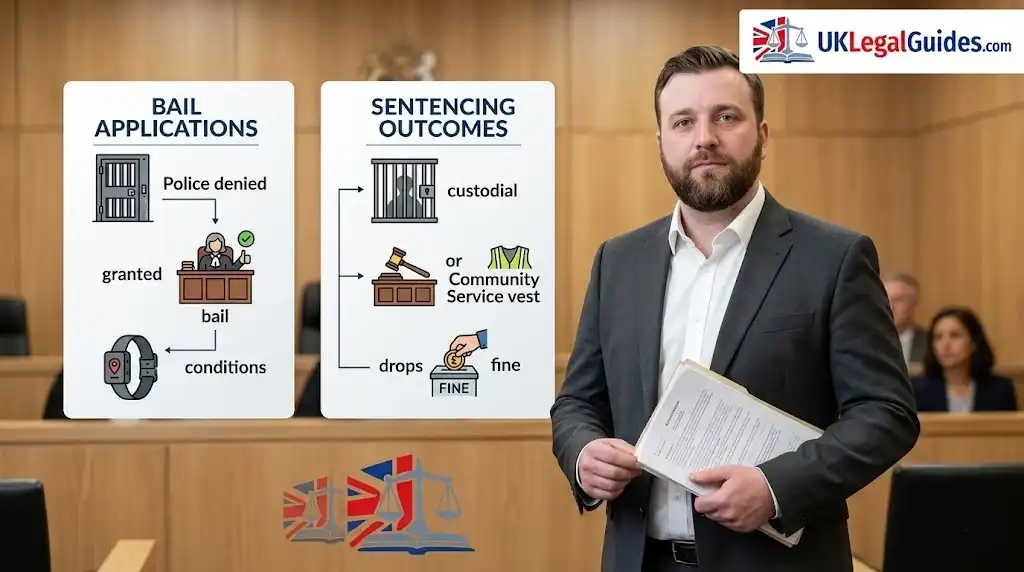
When someone is arrested on suspicion of domestic abuse in England and Wales, questions about bail - whether the suspect can be released while the investigation or prosecution continues - are central to both public safety and fairness in the criminal justice system. Bail rules set out when bail should be granted, conditions that can be imposed, how risks are assessed and what happens if bail is denied or breached. In domestic abuse cases, these bail decisions are shaped by specific legal standards and safeguarding concerns because of the heightened risk of further harm to victims and witnesses.
Introduction to Bail in Domestic Abuse Cases
Bail is the temporary release of a person arrested and charged with an offence while they await further investigation, a hearing, or trial. Bail can be granted:
- Pre‑charge bail (before formal charges are made); or
- Post‑charge bail (after charging and pending court appearances).
For most offences, there is a legal presumption in favour of bail unless there are ‘substantial grounds' to believe one of the statutory exceptions applies, such as risks of failing to surrender, committing further offences, or interfering with witnesses. In domestic abuse cases, the safety of the alleged victim and witnesses is a critical part of assessing bail.
Domestic abuse cases typically involve intimate partners, family members or people living together, and the risk of repeat violence, intimidation or coercive behaviour is often high. This influences how police, prosecutors and courts approach bail decisions.
Legal Framework for Bail
Bail Act 1976 and Police and Criminal Evidence Act 1984
The Bail Act 1976 sets out the general legal rules for bail, including the right to bail and grounds for refusal. Police bail powers and conditions are also governed by sections of the Police and Criminal Evidence Act 1984 (PACE).
Under the Bail Act 1976, courts must grant bail unless there are justified concerns based on the statutory exceptions, including:
- Failing to attend court;
- Committing further offences while on bail;
- Interfering with witnesses or obstructing justice.
Domestic abuse elevates concerns about witness interference and further offending, often making the prosecution more likely to oppose bail or call for stringent conditions.
Pre‑Charge Bail and Domestic Abuse
When someone is arrested and held in custody, the police can release them on bail while investigation continues. Pre‑charge bail with conditions should be used where it is necessary and proportionate to protect victims, witnesses and the public, and to ensure the suspect appears in court.
Statutory guidance makes clear that, in domestic abuse cases, bail with conditions “should always be considered” if there is a risk of serious harm to victims or others.
If police release a suspect without bail (for example, under investigation), there will be no bail conditions and victims can feel unprotected - especially if the suspect returns home. Investigators are encouraged to balance this risk against the impact on the suspect.
Bail Conditions in Domestic Abuse Cases
In both pre‑charge and post‑charge contexts, bail conditions are designed to reduce risk. In domestic abuse cases, common conditions include:
Non‑contact Orders
A condition may prohibit the suspect from directly or indirectly contacting the alleged victim, their children, family and friends. This applies even if the victim initiates contact.
Exclusion and Geographic Restrictions
The suspect may be ordered not to attend:
- The victim's home or street;
- Workplaces, schools, childcare settings or other routine locations for the victim or their children.
Specified distances around these locations can also be used in more serious risk scenarios.
Residence and Reporting Conditions
Police and courts may require the suspect to live at a particular address (not the victim's), and to report regularly to a police station or bail officer.
Additional conditions can include curfews, electronic monitoring, or prohibitions on contact with certain people or places.
Safeguarding Measures
Conditions aim to balance safeguarding victims while not imposing unnecessary restrictions on the suspect. Views of victims, support workers and specialist services (such as Independent Domestic Violence Advisors) are often sought where possible to inform condition setting.
Prosecutors and Bail Decisions
When bail is considered, prosecutors play a key role in advising courts on bail objections and conditions. In domestic abuse cases, prosecutors must:
- Review risk assessments and victim statements;
- Consider the safety of adult and child victims;
- Provide information to courts about any risk of intimidation or further harm.
Prosecutors may oppose bail entirely if there is a risk of harm or interference, seeking a remand in custody instead. They also recommend appropriate conditions to reduce risk if bail is granted.
Variations and Reviews of Bail
Bail conditions are not fixed; they can be varied or reviewed on application by the defence or prosecution. Courts take into account:
- New risk information;
- Victim safety concerns;
- Compliance with existing conditions.
If circumstances change (for example, a new risk to the victim), the prosecution can apply to vary conditions or oppose bail. Courts will assess the updated risk and decide accordingly.
What Happens if Bail Conditions Are Breached
Breaching bail conditions in domestic abuse cases is treated seriously:
- Police may arrest the suspect if they believe a condition has been breached.
- On arrest, courts can review bail and decide whether to remand the suspect in custody, amend conditions or maintain bail with stricter terms.
Even if a victim consents to contact, the suspect is legally obliged to comply with bail conditions. Rights and responsibilities rest with the person on bail.
Balancing Victim Protection and Fairness
In domestic abuse bail decisions, courts must balance:
- Protecting victims and witnesses from harm or intimidation;
- Ensuring suspects are not unnecessarily detained before trial.
Statutory guidance and prosecutorial practice emphasise victim safety, but also recognise the need for proportionate bail conditions that reflect individual circumstances.
Practical Considerations for Victims and Suspects
For victims, it is important to understand:
- Bail does not create rights for the victim; it regulates the suspect.
- Victims should be informed of bail decisions and conditions by police or specialist services.
For suspects, compliance with bail conditions is essential. Non‑compliance can lead to arrest, remand and may be considered in later sentencing.
Key Takeaways
Bail in domestic abuse cases under England and Wales law is governed by the Bail Act 1976 and PACE. Police and courts must carefully assess risks of harm, witness interference and further offences when deciding whether to grant bail. In domestic abuse cases, conditions like non‑contact orders, exclusion areas and reporting requirements are often necessary to protect victims and support investigations. Prosecutors inform courts about risk and may oppose bail where appropriate. Any breach of conditions can lead to arrest and stricter court review. The overriding principle is to ensure victim safety while upholding fairness in the criminal justice process.
