
This guide is maintained as a current resource for September 2026 and covers only the laws of England and Wales. Information is for general guidance, not legal advice. Consult a qualified solicitor for advice specific to your situation.
Discover how bail is considered in sexual offence cases in England and Wales. This guide explains the legal framework, key risk factors, prosecutorial roles, common bail conditions and what happens when bail is refused, helping readers understand bail decisions in serious criminal cases.
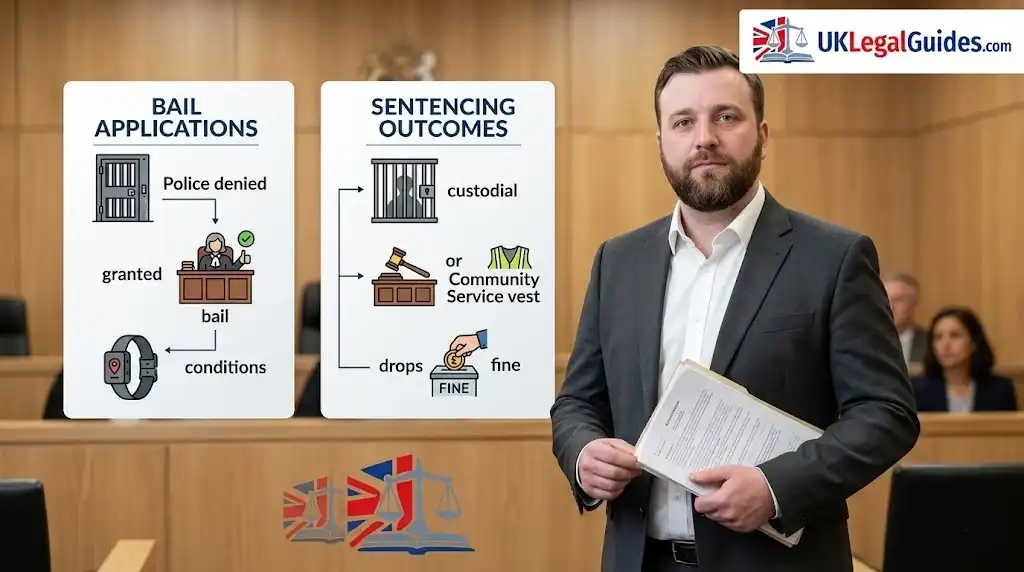
Bail is a legal mechanism that permits a person charged with a criminal offence to be released from custody while awaiting trial or further hearings. In sexual offence cases, decisions about bail are especially sensitive because of the potential risks to complainants, witnesses and the public, and the serious nature of the allegations involved. This article explains how bail is approached in sexual offence cases in England and Wales, including the statutory framework, key risk factors, the role of police and prosecutors, conditions that may be imposed, and what happens if bail is refused.
The Legal Framework for Bail
Bail Act 1976 and Rights to Bail
The Bail Act 1976 sets out the general legal right to bail in criminal proceedings in England and Wales. Under the Act, a defendant should be granted bail unless there are substantial grounds for believing that:
- They might fail to surrender to custody (appear in court);
- They might commit further offences while on bail;
- They might interfere with witnesses, victims or otherwise obstruct justice.
This statutory framework applies to all criminal cases, including sexual offence charges.
Presumption and Exceptions
There is a presumptive right to bail on first appearance. However, bail can be refused where prosecutors or the court establish that one or more of the statutory grounds are met. In sexual offence cases, the risk of further offending or interference with complainants and witnesses is a frequent concern because of the intimate nature of the allegations.
According to UK Parliament guidance, where a person is charged with or previously convicted of serious sexual offences, the usual right to bail no longer applies unless there are exceptional circumstances justifying release. This exception recognises the serious nature of harm alleged and the need to protect complainants and the public.
Police and Prosecutor Roles in Bail Decisions
Police Bail (Pre‑Charge)
When a suspect is arrested on suspicion of a sexual offence, the police must decide whether to grant pre‑charge bail. Under statutory guidance, bail - with or without conditions - should be considered where there is any risk of serious harm to victims, witnesses or the public. This includes most sexual offence investigations.
Police must assess necessity and proportionality, meaning bail should only be used if needed, and conditions must be appropriate to manage risk. When bail is granted, officers must consider potential conditions that reduce risk, such as non‑contact with the complainant and reporting requirements.
Prosecutor Review (Post‑Charge)
Once a suspect is charged, the Crown Prosecution Service (CPS) reviews whether to support, oppose or recommend conditions for bail. Prosecutors must present comprehensive risk information to the court so it can make an informed bail decision. The CPS routinely opposes bail where there is a credible risk to complainants or the public.
Risk Factors Specific to Sexual Offence Cases
Courts assess bail with particular attention to risks that may be elevated in sexual offence cases:
1. Risk of Contact or Intimidation
There may be concern that a defendant might contact or intimidate the complainant or witnesses, either directly or indirectly. Courts will consider whether allowing contact could cause harm or influence testimony.
2. Risk of Reoffending
If there is evidence suggesting a likelihood that the defendant could commit another sexual offence while on bail, this weighs heavily against granting bail or may lead to strict conditions.
3. Failure to Appear
The seriousness of sexual offence charges, and the potential for a long sentence if convicted, can increase the risk of a defendant absconding. The court considers factors such as community ties, employment and past compliance with bail.
4. Strength of the Evidence
Although bail is not about guilt or innocence, the strength of the prosecution's case can influence bail decisions. A strong case may support remand in custody because the risk of conviction and its consequences increases incentive to abscond.
Bail Conditions in Sexual Offence Cases
Where bail is granted, the court or police will usually impose conditions to manage risk and ensure effective justice administration. These may include:
Non‑Contact Conditions
Defendants may be legally prohibited from contacting the complainant and other protected persons, including through third parties. This helps prevent intimidation or harassment.
Residence Restrictions
Conditions may specify where a defendant must live (for example, not at an address shared with the complainant) and may exclude them from certain geographic areas.
Reporting Requirements
Regular reporting to a police station or other authority can be required, and in serious cases, electronic monitoring or curfews may be imposed to reduce risk.
Other Protective Conditions
Additional terms - such as surrendering travel documents or staying away from locations associated with the alleged offence - may be used where necessary and proportionate.
Conditions must always be reasonable, proportionate and enforceable and tailored to the specific risk profile of the case.
What Happens if Bail Is Refused
If bail is refused, the defendant will be remanded in custody until the next court hearing or trial. Refusal typically arises when the court is satisfied that one or more statutory grounds for withholding bail are made out - for example, a significant risk of further offences, interference with witnesses or failure to appear.
Even when bail is initially refused, it may be reconsidered later if circumstances change, such as new information about risk levels or additional protective measures being available.
Appeals and Review of Bail Decisions
Defendants may apply for bail at subsequent hearings, and defence lawyers can argue that risks can be mitigated by conditions. In some situations, the prosecution can also apply to vary or revoke bail if new risk factors arise after bail was granted.
Practical Example
Consider a defendant charged with a sexual offence involving an acquaintance. When brought before a magistrates' court, prosecutors present risk assessments indicating a possibility the defendant could contact the complainant or obstruct the investigation. The court may refuse bail or grant bail with strict conditions such as non‑contact, residence away from the complainant's home, daily reporting and exclusion zones. If bail is refused, the defendant remains in custody; if granted, compliance with conditions is closely monitored.
Key Takeaways
Bail considerations in sexual offence cases in England and Wales are governed by the Bail Act 1976 and guided by statutory and prosecutorial policy. While there is a general right to bail, this can be withheld where there are substantial grounds to believe that risks to complainants, witnesses, the public or the justice process cannot be properly managed by conditions. Risk assessment, protective conditions and judicial discretion are central to bail decisions in these serious cases, and prosecution teams play a key role in advising courts on appropriate outcomes.
