
This guide is maintained as a current resource for September 2026 and covers only the laws of England and Wales. Information is for general guidance, not legal advice. Consult a qualified solicitor for advice specific to your situation.
Explore how bail is decided in England and Wales for drug offence cases, including legal rights to bail, police and court procedures, common bail conditions, risk assessments and what can influence refusal or variation of bail.
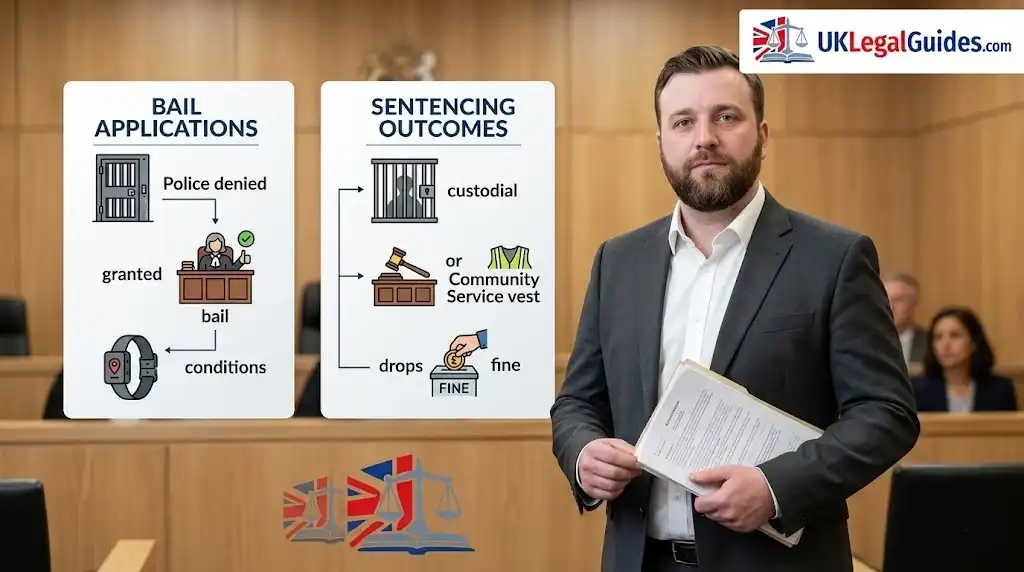
When someone is arrested or charged with a drug offence in England and Wales, one of the earliest legal questions is whether they will be released on bail while the case continues. Bail procedures are designed to strike a balance between the defendant's right to liberty and the need to protect the public, ensure attendance at court hearings, and prevent further offending. In drug offence cases, the seriousness of the allegations, risks of absconding and risk of committing further offences are all relevant to bail decisions. This article explains how bail works for drug offences, step by step, drawing on current law and authoritative guidance.
What Bail Is and How It Applies to Drug Cases
Bail allows a person charged with a criminal offence to be released from custody while awaiting trial or further hearings. Bail may be granted by the police (pre‑charge or post‑charge) or by the magistrates' or Crown Court after charge. Standard bail conditions might include living at a specified address, surrendering a passport, reporting regularly to a police station, or avoiding contact with certain individuals. If these conditions are not complied with, the defendant may be re‑arrested and remanded in custody.
In drug offence cases, bail procedures operate within the broader legal framework of the Bail Act 1976 and related statutory guidance, which set out the right to bail and exceptions where bail may be refused. Decision‑making in these cases considers the nature and severity of the offence, risks to the public, and whether bail conditions can effectively manage those risks.
1. Legal Basis for Bail in Drug Offence Cases
The Presumption of Bail
Under the Bail Act 1976, a person charged with an offence generally has a right to bail unless there are substantial grounds for believing that one or more of the statutory exceptions apply. The principal exceptions include:
- A risk that the person will fail to surrender to custody;
- A risk of committing further offences while on bail;
- A risk of interfering with witnesses or otherwise obstructing justice.
Drug offences range from less serious possession charges to far more serious offences such as possession with intent to supply, supply, production and importation of controlled drugs. The seriousness of the offence affects the court's assessment of bail because more serious allegations can increase the perceived risk of reoffending or absconding.
2. Police Bail and Pre‑Charge Procedures
Initial Arrest and Police Bail
When someone is arrested on suspicion of a drug offence, the police must decide whether to charge the person and whether to grant police bail. Police bail can be granted before any charge is made in order to allow time for further investigation, evidence gathering and liaison with the Crown Prosecution Service (CPS).
Police bail conditions may include requirements to:
- Attend the police station at predetermined times;
- Reside at a specific address;
- Abstain from contacting certain people or places.
In complex investigations such as county lines drug operations, pre‑charge bail with conditions like curfews or movement restrictions may be imposed to safeguard suspects and to give time for thorough investigation.
Time Limits on Pre‑Charge Bail
Statutory guidance imposes time limits on pre‑charge bail, and extensions may require supervisory authority or court approval if investigations take longer than the standard period (initially up to three months, with further extensions possible under appropriate authorisation).
3. Post‑Charge Bail Hearings
Bail Decisions at Court
Once a person has been charged with a drug offence, bail decisions are made by the magistrates' court or, in more serious cases where the matter is referred to the Crown Court. The court must consider the statutory criteria for bail and any objections from the prosecution.
Prosecutors may oppose bail on the basis that there are substantial grounds to believe that the defendant would:
- Fail to attend future court dates;
- Commit further drug‑related offences or other crimes;
- Interfere with witnesses, victims or evidence.
Conditions must be capable of mitigating these risks.
Factors Influencing Bail Decisions
In drug offence cases, courts look at a range of considerations, including:
- Seriousness of the offence: Supply, trafficking and importation offences are assessed more cautiously due to the levels of harm they can cause.
- Previous convictions: A defendant's prior convictions, particularly for similar drug‑related matters, can influence the perceived risk of reoffending and make bail less likely.
- Risk of Absconding: Courts consider whether the defendant has strong community ties (such as employment or family) that reduce the risk of absconding.
- Risk of Committing Further Offences: A person who tested positive for a Class A drug in custody (indicating recent use) may be considered a higher risk for further drug offences, and bail may only be granted if the court is satisfied there is no significant risk of further offending.
4. Bail Conditions in Drug Offence Cases
When bail is granted, courts or police may impose conditions tailored to the risks identified. Common bail conditions include:
Reporting and Residence Conditions
The defendant may be required to report to a police station at regular intervals and reside at a specified address. These requirements help ensure compliance and attendance at court.
Restrictions on Contact and Movement
Conditions may prohibit contact with certain individuals or restrict travel to certain locations. In complex drug cases, geographical exclusion orders or curfew conditions may be used to prevent ongoing involvement in drug activities.
Passport Surrender
Surrender of a passport or travel documents is sometimes required to minimise the risk of absconding.
Electronic Monitoring and Curfew
The court may impose an electronic monitoring condition or a curfew as an additional safeguard where there is a heightened risk of offending while on bail.
5. Bail Refusal and Remand in Custody
Grounds for Refusing Bail
If the court decides that none of the conditions are sufficient to mitigate the identified risks, it may refuse bail. In drug cases, this is more likely if:
- The person is charged with a serious supply or trafficking offence;
- There is evidence of strong likelihood of further drug‑related offending; or
- Previous bail breaches or convictions suggest a risk of non‑compliance.
If bail is refused, the defendant will be remanded in custody until the next hearing or trial. The court's decision must be justified in open court, with reasons given for refusal or for the conditions imposed.
6. Variation and Review of Bail
Both defendants and prosecutors can apply for variation of bail conditions if circumstances change. For example, if new evidence suggests increased risk to the public, prosecutors may seek stricter conditions or a remand in custody. Conversely, defence may argue that conditions can be relaxed without undue risk. This requires court approval.
Practical Example
Suppose a defendant is arrested on suspicion of possession with intent to supply a Class A drug. The police decide to grant pre‑charge bail with conditions requiring reporting to a local police station and a curfew. When charged, the prosecution opposes bail at the magistrates' court based on the seriousness of the offence and risk of further offending. The court considers the defendant's background, ties to the community, and safety concerns. If the court is satisfied that appropriate conditions can mitigate the risks, bail may be granted with strict terms. If not, the defendant may be remanded in custody. Factors such as prior convictions for similar offences can affect the outcome.
Key Takeaways
Bail procedures in drug offence cases in England and Wales involve a structured assessment of risk and rights. Beginning with police decisions on pre‑charge bail and progressing to court hearings after charge, the system is designed to protect the public, ensure court attendance and prevent further offending. Bail decisions consider the seriousness of the drug offence, previous convictions, risk of absconding, and the possibility of further drug or criminal activity. Where bail is granted, conditions tailored to managing risk are imposed, and courts will refuse bail where conditions would not sufficiently protect the interests of justice.
