
This guide is maintained as a current resource for September 2026 and covers only the laws of England and Wales. Information is for general guidance, not legal advice. Consult a qualified solicitor for advice specific to your situation.
Learn how unpaid work requirements are enforced in England and Wales, including supervision by probation, how non‑compliance is handled, breach proceedings in court and what can happen if an offender fails to complete their Community Payback hours.
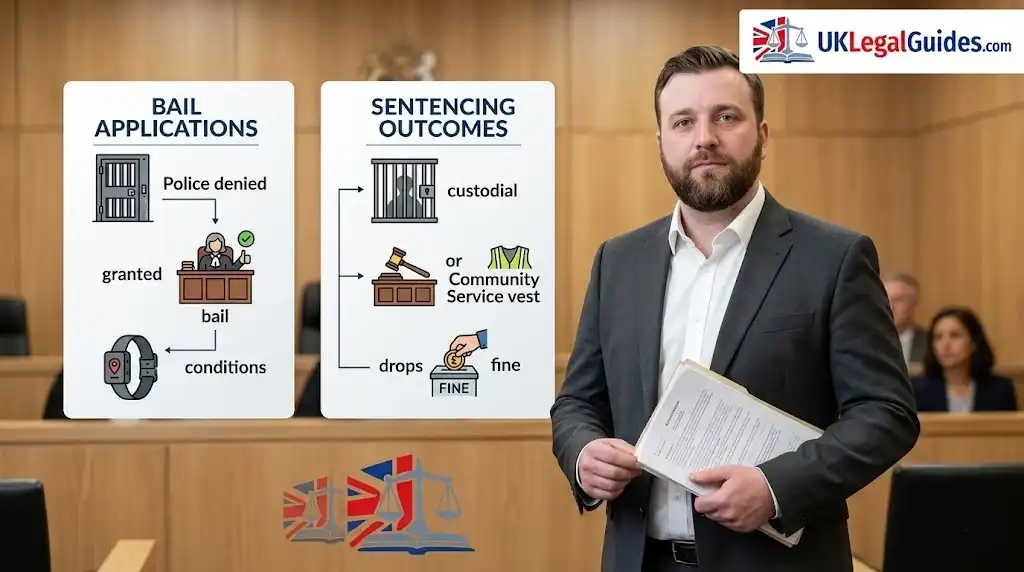
When a court in England and Wales imposes an unpaid work requirement - often called Community Payback - the offender must complete a set number of hours of unpaid work as part of a community order or suspended sentence order. Enforcement is the process that ensures the individual completes these hours in the way the court intends, and that non‑compliance is addressed through appropriate legal steps. This article explains how these requirements are enforced, what happens if an offender fails to comply, and what practical processes are involved. It draws on current guidance and legal context to provide clear, reliable information for solicitors, students and members of the public.
Understanding Unpaid Work Requirements
An unpaid work requirement obliges an offender to undertake between 40 and 300 hours of community work to benefit the local area, such as clearing graffiti or maintaining green spaces. The work must be completed within a specified timeframe, usually 12 months of sentence unless extended by the court.
Offenders subject to such a requirement are instructed on when and where to attend, and their participation is monitored by the Probation Service or other supervising officers. Compliance is central to the sentence's purpose, which combines punishment, reparation to the community and potential rehabilitation.
The Enforcement Framework
1. Supervision and Attendance Tracking
Once an unpaid work requirement is imposed, the individual is allocated a responsible officer from the Probation Service. This officer:
- Informs the offender of their scheduled work sessions;
- Monitors attendance and performance during those hours;
- Records any absences, late attendance, or refusal to work.
These records form the basis for assessing whether an offender is complying with their requirement.
Probation services maintain detailed attendance logs. When an offender fails to attend or participate as directed, this is noted as a potential non‑compliance event.
2. Handling Absences and Non‑Compliance
Not all absences lead directly to court proceedings. The Probation Service distinguishes between:
- Acceptable absences, such as illness supported by evidence or unavoidable emergencies; and
- Unacceptable absences, including failing to attend without good reason or unexcused refusal to work.
Repeated unacceptable absences trigger internal enforcement procedures. Where these indicate willful non‑compliance, the supervising officer may initiate breach proceedings in court. The process includes:
- Notifying the offender of the default and offering opportunities to explain or rectify the situation;
- Recording evidence of missed sessions; and
- Consulting with a court representative to determine whether breach proceedings should be pursued.
Breach Proceedings: Returning to Court
If an offender persistently fails to complete work sessions without acceptable cause, the matter may be returned to the court. In court, the judge or magistrates will consider whether the unpaid work requirement has been breached and decide on the appropriate outcome.
At a breach hearing, the court reviews compliance records and any representations. If the court determines a breach has occurred, it has several options, including:
- Revoking the community order or suspended sentence order and imposing a different sentence, which could include custody if appropriate.
- Varying the order, such as increasing the number of unpaid work hours or attaching additional requirements (curfew, supervision, etc.).
- Adding a fine or other penalty proportionate to the level of non‑compliance.
- Combining penalties, for instance imposing extra unpaid hours and a fine.
In deciding what action to take, the court considers the offender's level of compliance, reasons for absences, engagement with other aspects of the order and any personal circumstances that may have affected performance.
Extensions and Revocation
If the unpaid work hours have not been completed within the original 12‑month period, the probation service must apply to the court to extend the delivery period so remaining hours can be completed. Without such an extension, no further unpaid work can lawfully be undertaken beyond the expiration of the order unless the court reinstates or extends it.
The court can also revoke the unpaid work requirement entirely if it is shown to be inappropriate or impossible to complete due to changed circumstances. This is a separate application to variation or breach processes and must be justified on the facts.
Practical Steps for Compliance
To avoid enforcement action:
- Attend all scheduled sessions promptly and complete assigned tasks as instructed.
- Communicate proactively with the supervising officer if genuine difficulties arise, such as illness, work commitments or transport problems.
- Provide evidence for any absences to ensure they are recorded as acceptable.
- Keep a record of hours completed as a personal reference, even though official records are maintained by the supervising team.
Open communication with probation staff can prevent misunderstandings that could otherwise escalate into breach proceedings.
What Happens After Enforcement Action?
If the court finds a breach, the offender receives the new sentence or varied order immediately or at a subsequent hearing. A breach order becomes enforceable and must be complied with in the same way as the original requirement. Further non‑compliance can lead to additional court action.
Key Takeaways
Enforcement of unpaid work requirements in England and Wales involves structured supervision, clear attendance recording and proportionate responses to non‑compliance. The Probation Service monitors attendance, distinguishes between acceptable and unacceptable absences, and works with courts where persistent breaches occur. Breach proceedings may lead to variation of the order, additional penalties or, in serious cases, revocation and re‑sentencing. Clear communication and engagement with the supervising officer are crucial in avoiding enforcement action and completing unpaid work requirements successfully.
