
This guide is maintained as a current resource for September 2026 and covers only the laws of England and Wales. Information is for general guidance, not legal advice. Consult a qualified solicitor for advice specific to your situation.
Learn how appeals against sentencing are handled in England and Wales, including who can appeal, the courts involved, procedural steps, time limits for filing, possible outcomes and practical considerations when challenging a criminal sentence.
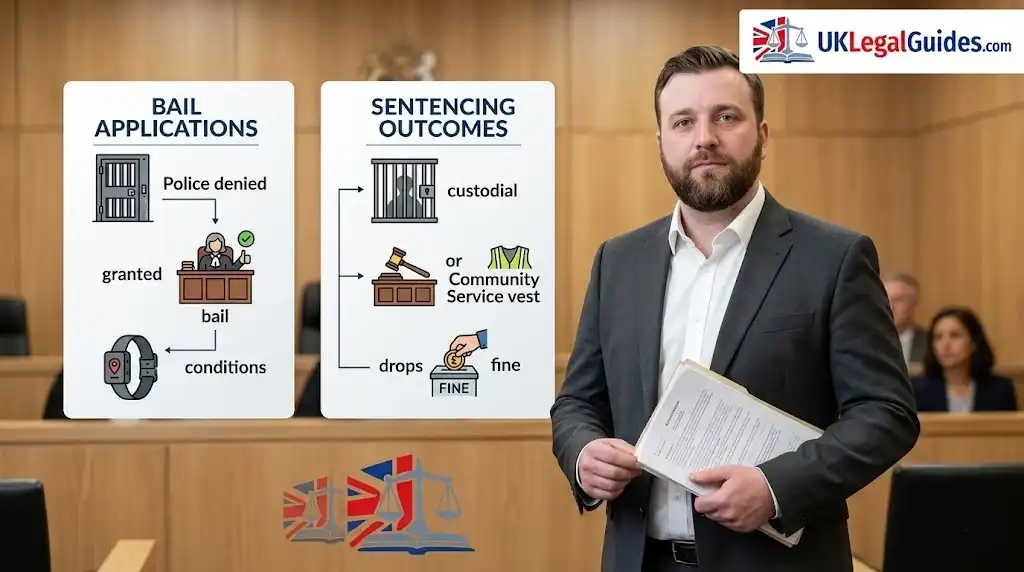
In England and Wales, a criminal defendant has the right to challenge the sentence imposed by a court if it is believed to be unjust, excessive or legally flawed. Appeals against sentencing are a core part of the criminal justice system, ensuring that sentences are fair, proportionate and in accordance with the law. Appeals follow a structured legal procedure involving specific time limits, jurisdictions and processes, whether the original sentence was imposed by a magistrates' court or the Crown Court.
This article explains how sentencing appeals work, who can appeal, the courts involved, procedural steps, possible outcomes, time limits, and practical considerations for those considering an appeal.
Introduction to Sentencing Appeals
A sentencing appeal is the legal process by which a defendant requests a higher court to review and change their sentence. An appeal may argue that:
- The sentence was unduly harsh or excessive;
- There was a legal error in the way the sentence was calculated or imposed;
- The judge misapplied sentencing guidelines or statute.
Appeals are separate from appeals against conviction, although both may be lodged together in some cases. The procedure and court responsible depend on where the original sentence was issued.
Who Can Appeal Against a Sentence?
A defendant may appeal against their sentence after conviction, regardless of whether they pleaded guilty or not guilty. However:
- If the original conviction was entered on a guilty plea, the defendant can appeal only the sentence.
- If the conviction was after a trial, the defendant can appeal both conviction and sentence, but the appeal against sentence follows the same process as standalone sentence appeals.
In addition to a defendant, in limited circumstances the Attorney General can refer a sentence as unduly lenient to the Court of Appeal Criminal Division for review. This is known as the unduly lenient sentence scheme and applies only to certain serious offences.
Time Limits for Appeal
Time limits are strict:
- An appeal against sentence must be lodged within 28 days of the date on which the sentence was imposed.
- If this deadline is missed, the appellant must provide good reasons for the delay and seek the court's permission to extend time.
Failure to comply with time limits can result in the appeal being rejected without substantive consideration.
Where Are Sentencing Appeals Heard?
The court that hears a sentencing appeal depends on the court that originally imposed the sentence.
1. Appeals From a Magistrates' Court
A defendant can appeal a sentence from a magistrates' court to the Crown Court. This is a re‑hearing of the sentencing exercise in front of a Crown Court judge and two experienced magistrates. The Crown Court has the power to:
- Confirm the original sentence;
- Reduce the sentence;
- Increase the sentence (although this is rare and subject to cross‑appeal by the prosecution).
Appeals from the magistrates' court are routinely available and do not require prior permission.
2. Appeals From the Crown Court
For sentences imposed by the Crown Court, appeals go to the Court of Appeal (Criminal Division). To bring such an appeal, a defendant must apply for permission to appeal (leave to appeal). Permission is needed because the Court of Appeal's jurisdiction is statutory, governed by the Criminal Appeal Act 1968 and subsequent rules.
A judge may grant a certificate that the case is fit for appeal at the Crown Court level, allowing a straight appeal, or the defendant can seek permission directly from the Court of Appeal after lodging the appeal notice.
The Appeal Process Step by Step
1. Lodging a Notice of Appeal
The first step is to submit a Notice of Appeal (form NG for convictions or the relevant form for sentence) to the court office within 28 days of sentencing. This notifies the court and the prosecution that an appeal is being pursued.
2. Applying for Permission to Appeal
In Crown Court cases, a single judge of the Court of Appeal reviews the grounds of appeal to decide whether there is a realistic prospect of success. If leave is refused, the appellant can renew the application before a full bench of the Court of Appeal.
3. Prosecution Response
In some cases, the prosecution may be invited to respond with written submissions to assist the judge in deciding whether to grant permission.
4. Listing the Appeal Hearing
Once permission is granted, the full Court of Appeal schedules a hearing. The appellant (or their legal representative) presents oral argument, often supported by written submissions highlighting errors in law, principle or proportionality.
5. Judgment and Outcome
At the hearing, the Court of Appeal may:
- Dismiss the appeal, confirming the original sentence;
- Allow the appeal and reduce the sentence;
- Quash the conviction (if on both sentence and conviction); or
- Substitute a different sentence considered appropriate.
If a sentence is found to be unduly lenient under the Attorney General referral scheme, the Court of Appeal may increase it where legally appropriate.
What Happens After a Successful Appeal?
If an appeal is successful and the sentence is reduced, the court will issue a revised sentence and may order that the defendant be re‑sentenced in accordance with the new determination. In some circumstances, time already served may be taken into account when adjusting custody periods.
Appeal to Higher Courts
In rare cases where there is a significant point of law of general public importance, a defendant or prosecution may seek to take a sentencing appeal beyond the Court of Appeal to the Supreme Court. This requires permission and typically involves legal questions rather than factual disputes.
If all appeal routes are exhausted and there is believed to have been a miscarriage of justice, an application may be made to the Criminal Cases Review Commission (CCRC) to refer the case back to the Court of Appeal.
Common Practical Considerations
- Grounds for appeal: Appellants must articulate why the sentence is wrong in law, principle or disproportionate; mere dissatisfaction is insufficient.
- Representation: Legal advice from a solicitor or barrister experienced in criminal appeals is strongly recommended given the complexity of the process.
- Costs and risks: Unsuccessful appeals can expose appellants to additional costs and, in limited circumstances, a loss of time order affecting time served.
Key Takeaways
Appeals against sentencing in England and Wales allow defendants to challenge custodial and non‑custodial sentences they believe to be wrong in law or excessive. The process depends on the original court:
- From magistrates' courts, appeals go to the Crown Court as full rehearings.
- From the Crown Court, appeals proceed to the Court of Appeal Criminal Division, typically requiring permission to appeal.
Strict time limits apply, and appellants must present clear grounds for review. Successful appeals can result in sentence reductions, substitutions or adjusted custody periods, while further appeal may be possible in limited circumstances to higher courts. Understanding this process is essential for defendants, solicitors and members of the public seeking clarity on justice rights and judicial review mechanisms in sentencing.
