
This guide is maintained as a current resource for September 2026 and covers only the laws of England and Wales. Information is for general guidance, not legal advice. Consult a qualified solicitor for advice specific to your situation.
Understand how custodial sentences can be challenged in England and Wales, including appeals from magistrates' courts to Crown Courts, appeals from the Crown Court to the Court of Appeal, the Unduly Lenient Sentence Scheme, judicial review options, time limits and procedural steps.
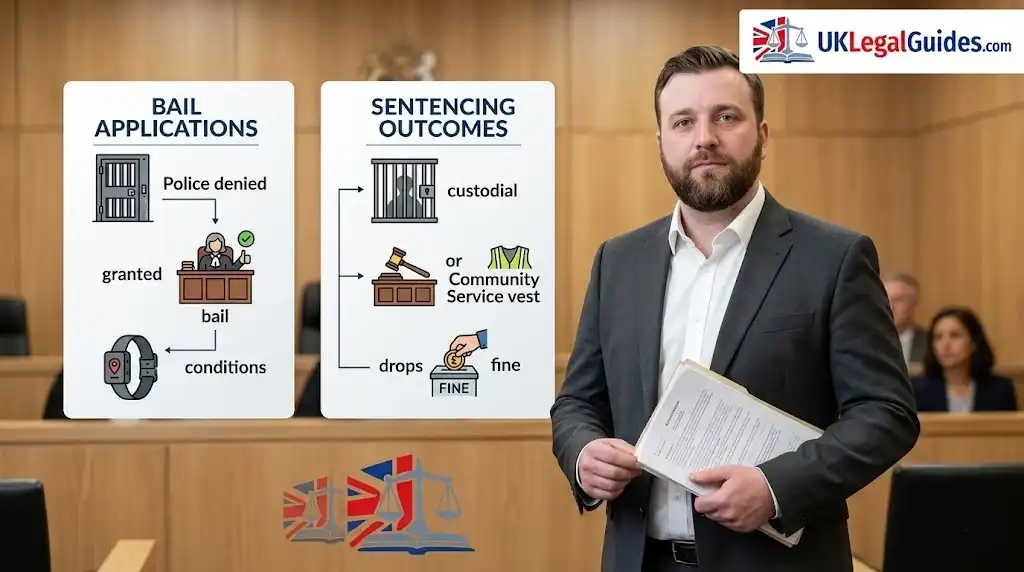
Challenging a custodial sentence in England and Wales means formally asking a court to review and change a prison sentence that a court has imposed. The legal system recognises that, in some cases, sentences may be manifestly excessive, based on legal error, or unduly lenient; there are established procedures for contesting these outcomes. This article explains those processes step by step, including rights, timelines, key courts involved, and what outcomes may result. The focus is on custodial sentences: periods of imprisonment ordered by a magistrates' court or Crown Court.
Why Challenge a Custodial Sentence?
A custodial sentence may be challenged when it is believed that it:
- Is disproportionately harsh given the offence and offender's circumstances;
- Involves a misapplication of law or sentencing principles;
- Falls outside the range that a reasonable judge could have imposed;
- Is unduly lenient (too low compared to statutory expectations).
Challenging a sentence is sensitive legally and procedurally distinct from challenging a conviction. Sentencing appeals do not usually retest guilt but examine whether the sentence imposed was wrong in law or principle.
Basic Rights and Time Limits
Time Limits for Appeals
If you want to appeal against a custodial sentence, you must usually act quickly:
- Appeals from magistrates' courts must normally be lodged within 21 days of sentencing.
- Appeals against sentences from the Crown Court must be made within 28 days of the sentence being imposed.
In limited circumstances, you can apply for permission to appeal out of time if you can show a valid reason for delay.
Failing to meet these deadlines without permission may prevent the appeal being heard.
Challenging Sentences From a Magistrates' Court
When a custodial sentence is handed down by a magistrates' court:
1. Appeal to the Crown Court
A defendant who wants to challenge a custodial sentence can appeal to the Crown Court. This appeal is a full re‑hearing of the sentence (and conviction if applicable).
At the Crown Court, experienced judges and magistrates review the case, consider any new evidence or submissions, and decide whether the original sentence should be confirmed, reduced or increased.
2. Power to Vary or Rescind
In limited situations, a magistrates' court may alter its own sentence if there has been a clear mistake. This is exceptional but possible.
3. Case Stated and Judicial Review
If you believe the sentence involved an error of law (for example, the judge misinterpreted a statute), you can challenge the sentence through a case stated procedure or judicial review in the High Court. These routes focus on legal errors, not whether the sentence was excessive per se.
Challenging Sentences From the Crown Court
When the Crown Court imposes a custodial sentence, the appeal routes differ:
1. Appeal to the Court of Appeal
A defendant must apply for permission to appeal to the Court of Appeal (Criminal Division). This process involves lodging a Notice of Appeal (typically Form NG) and written grounds for appeal within 28 days.
The court first considers whether the appeal has a reasonable prospect of success. If permission is granted, the full appeal hearing takes place before a panel of Court of Appeal judges.
Possible outcomes of a successful appeal include:
- Reduction of the sentence;
- Substitution of a different sentence;
- Confirmation that the original sentence was legally sound.
2. Bail Pending Appeal
A defendant serving a custodial sentence may apply for bail pending the outcome of the appeal. Courts grant bail only in exceptional circumstances, usually where the appeal has strong prospects and the sentence is relatively short.
Challenging Unduly Lenient Sentences
A separate process exists where a custodial sentence is believed to be too low:
1. Unduly Lenient Sentence Scheme
Under the Criminal Justice Act 1988, anyone (including members of the public, victims, or organisations) can ask the Attorney General's Office to review a sentence that is thought to be unduly lenient for certain serious offences such as murder, rape or robbery.
The Attorney General or Solicitor General must decide and, if they consider it may be unduly lenient, refer the case to the Court of Appeal within 28 days of sentencing.
2. Court of Appeal Review
The Court of Appeal then examines the sentence based only on the evidence available at the original hearing. If it finds the sentence falls outside the reasonable range judges could have imposed, it may increase the sentence.
This scheme does not let individuals directly challenge their own sentence, but it provides a public mechanism to correct sentences considered to be grossly wrong in terms of severity.
Grounds for Appeal
Typical grounds for challenging custodial sentences include:
- Manifestly excessive sentences that exceed the reasonable range;
- Errors in applying sentencing guidelines;
- Miscalculation of statutory provisions (such as remission or custody time limits);
- Improper consideration of aggravating or mitigating factors.
An appeal must articulate clear legal or factual errors. Mere disagreement with the sentence's severity without demonstrating error in law or principle is unlikely to succeed.
Judicial Review of Sentencing Decisions
In rare cases, if a court or sentencing judge has acted irrationally, outside jurisdiction, or breached natural justice, a challenge may be made through judicial review in the High Court. This is a public law process focused on lawfulness of the decision‑making process, not the merits of the sentence.
Judicial review challenges must be promptly brought, although they are not a substitute for regular appeal processes.
Practical Considerations
Legal Representation
Appealing a custodial sentence is legally complex. Defendants often instruct solicitors and barristers experienced in criminal appeals to prepare grounds, navigate procedural rules and present arguments effectively.
Bail and Costs
An appeal does not automatically entitle a defendant to bail. Moreover, unsuccessful appeals can sometimes result in loss of time orders or costs being awarded.
Criminal Cases Review Commission
If all ordinary appeal avenues are exhausted and a miscarriage of justice is suspected (for example, new evidence emerges), an application can be made to the Criminal Cases Review Commission for a referral back to the Court of Appeal.
Key Takeaways
Challenging a custodial sentence in England and Wales involves structured legal processes:
- Appeals from magistrates' courts go to the Crown Court as a re‑hearing.
- Appeals from the Crown Court require permission to go to the Court of Appeal Criminal Division.
- The Unduly Lenient Sentence Scheme allows third‑party referrals for sentence review by the Attorney General within strict time limits.
- In limited circumstances, judicial review can challenge legal errors in how a sentence was imposed.
Timely action, clear grounds and understanding of procedural requirements are crucial for success.
