
This guide is maintained as a current resource for September 2026 and covers only the laws of England and Wales. Information is for general guidance, not legal advice. Consult a qualified solicitor for advice specific to your situation.
Learn how a community sentence (community order) can be appealed in England and Wales, including the process from magistrates' court to Crown Court, time limits for lodging appeals, possible outcomes, and practical considerations for challenging a sentence decision.
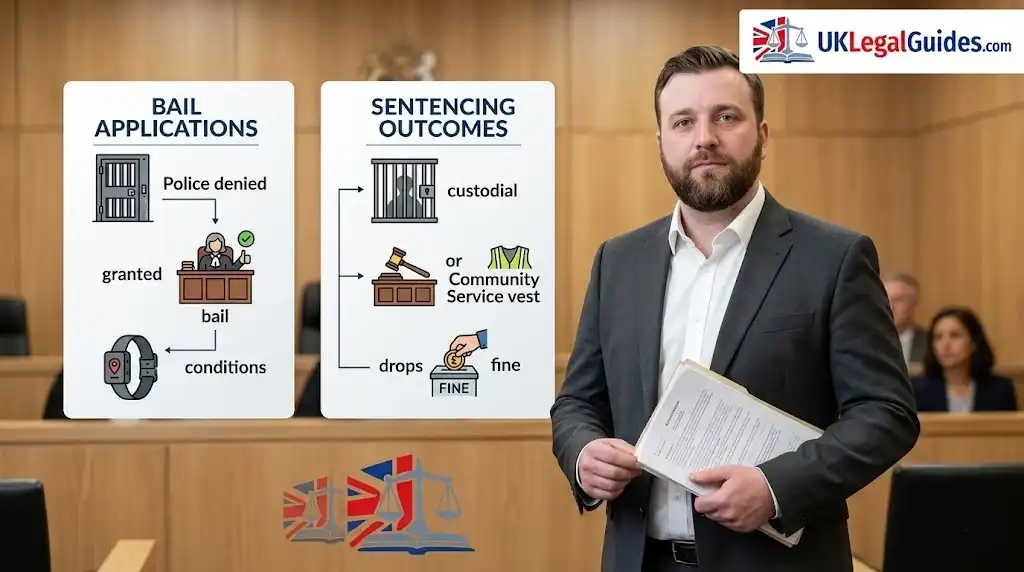
A community sentence (often also called a community order) is a criminal sentence imposed by a court in England and Wales that allows an offender to remain in the community under supervision, subject to specific requirements such as unpaid work, rehabilitation activities or curfews. Like other sentences, community orders can be challenged if the person believes the sentence was unjust, disproportionate or legally flawed. This article explains the process for appealing a community sentence, the legal rights involved, key procedural steps, time limits, and what outcomes can result.
Appeals against sentences - including community orders - are a key part of the criminal justice system's checks and balances, ensuring fairness, transparency, and compliance with legal principles.
What Is a Community Sentence?
A community sentence is an alternative to imprisonment. It combines statutory requirements - such as unpaid work, supervision by a probation officer, rehabilitation programmes, curfews, or exclusion from certain places - intended to address offending behaviour while avoiding the harms associated with custody. Community sentences are imposed by magistrates' courts or sometimes Crown Courts depending on the case.
Although appealing a community sentence is less common than challenging custodial sentences, the legal system provides routes to do so where there are legitimate grounds to question the sentence imposed.
Grounds for Appealing a Community Sentence
Before detailing the appeal procedure, it is important to understand when an appeal might be justified:
- Sentence was disproportionate or manifestly excessive - for example, the court imposed a community order when a more lenient disposal should have been available.
- The court applied the wrong legal principles or guidelines - for instance, error in considering sentencing guidelines under the Sentencing Code or other statutory provisions.
- Procedural unfairness or a fundamental error in sentencing practice - such as the court failing to consider relevant evidence or misapplying sentencing rules.
- Other orders - where the community sentence includes ancillary orders, such as curfew conditions or supervision terms, and legal rights have been misunderstood.
An appeal is not merely disagreement with the sentence's severity - there must be a sound legal basis.
Time Limits and Essentials
Time limits for lodging an appeal are strict:
- If the community sentence was imposed by a magistrates' court, a defendant usually has 21 days from the date of sentencing to lodge a notice of appeal. This appeals period typically applies to appeals to the Crown Court.
- If the sentence was imposed by a Crown Court (for example, after committal for sentencing), the appeal must be lodged within 28 days of sentencing, with permission required for the appeal.
If an appeal is late, the applicant must usually apply for permission to extend time and explain the delay. The court may refuse an out‑of‑time appeal without such permission.
Step‑by‑Step: Appealing a Community Sentence
Below is the general route to challenge a community order:
1. Lodge a Notice of Appeal
Appeals against a sentence imposed by a magistrates' court are initiated by lodging a notice of appeal with the magistrates' court office that imposed the community sentence. This is typically done using the relevant appeal form within the time limit (often 21 days).
The notice must state whether the appeal is against conviction, sentence, or both. In the context of a community sentence where conviction is not being challenged, the appeal will focus solely on the sentence.
2. Appeal Heard by Crown Court
Once the notice is lodged, the case is transferred to the Crown Court, where the appeal is heard as a re‑hearing (known as a hearing de novo). This means:
- A judge - usually a circuit judge or recorder - sits with two magistrates who were not involved in the original case.
- The Crown Court reviews whether the magistrates' court reached the correct decision on sentence based on the evidence and submissions.
The Crown Court can confirm the original sentence, quash or reduce it, or even vary it (including substituting another order within the magistrates' court's powers). This could mean replacing a community order with a different community order or another appropriate sentence.
3. Extensions of Time
If someone decides to appeal after the statutory time limit, they must ask the Crown Court for permission to appeal out of time before the substantive appeal is heard. The court will consider whether there are good reasons for the delay.
4. Case Stated or Judicial Review
In limited cases, grounds of appeal may not fit a normal sentence appeal. Instead, the defendant may seek:
- A case stated appeal to the High Court (Administrative Division) where the issue is a point of law or excess of jurisdiction; or
- Judicial review in the High Court if the court is alleged to have acted illegally, irrationally, or procedurally unfairly.
These are narrower and apply only where there is a legal error, not merely a disagreement over sentence severity.
What Happens at the Crown Court Hearing?
At the Crown Court hearing:
- The appellant (defendant) and their legal representative present written and oral submissions explaining why the community sentence was wrong in law or principle.
- The prosecution (often represented by the Crown Prosecution Service) can present counter‑arguments defending the original sentence.
- The Crown Court then decides whether the sentence should stand or be replaced with a different one.
The hearing is a full reconsideration of the sentencing exercise, not just a review “on paper”. The Crown Court has the same powers as the magistrates' court and can impose an alternative community order or another appropriate criminal sentence.
Possible Outcomes
The Crown Court may:
- Confirm the community sentence - upholding the original decision;
- Reduce or modify the order - such as lessening requirements or substituting a different community order; or
- Replace the sentence entirely - including imposing an alternative criminal disposal if justified.
It is also possible, although rare, for the Crown Court to impose a more severe sentence than the original, provided it stays within the legal powers available to the magistrates' court in the first instance.
Practical Considerations
Legal Advice and Representation
Appeals involve legal complexity, including drafting grounds of appeal and preparing submissions. It is strongly recommended to seek assistance from solicitors or barristers experienced in criminal appeals to ensure procedural requirements are met and to maximise the chance of success.
Costs and Risks
Appealing a community sentence can involve legal costs. If an appeal is unsuccessful, the original sentence remains in place. In rare circumstances where the Crown Court replaces the sentence, it could result in a new sentence that carries more onerous requirements.
Complaints About Probation Handling
If the grievance relates not to the sentence itself but to how probation services manage the order, complaints should be made to the relevant probation office. If unresolved, individuals may contact the Prisons and Probation Ombudsman for independent investigation of complaints about community supervision.
Key Takeaways
Challenging a community sentence in England and Wales is a formal legal process that requires strict compliance with procedural rules:
- Lodge a notice of appeal within the prescribed time after sentencing (typically 21 days from a magistrates' court sentence).
- The appeal is usually heard before the Crown Court, which conducts a fresh sentencing hearing and can confirm, vary or replace the community order.
- In limited circumstances, appeals can proceed by case stated or judicial review if there is a substantive legal error.
Understanding these routes is essential for defendants who believe their community sentence was inappropriate, ensuring access to justice and legal remedies available under criminal procedure law.
