
This guide is maintained as a current resource for September 2026 and covers only the laws of England and Wales. Information is for general guidance, not legal advice. Consult a qualified solicitor for advice specific to your situation.
Learn how breaches of probation orders (community orders or post‑sentence supervision) are handled in England and Wales, including the process from probation warning to court breach hearing, possible sanctions such as fines, added requirements or re‑sentencing, and practical considerations for defendants and enforcement authorities.
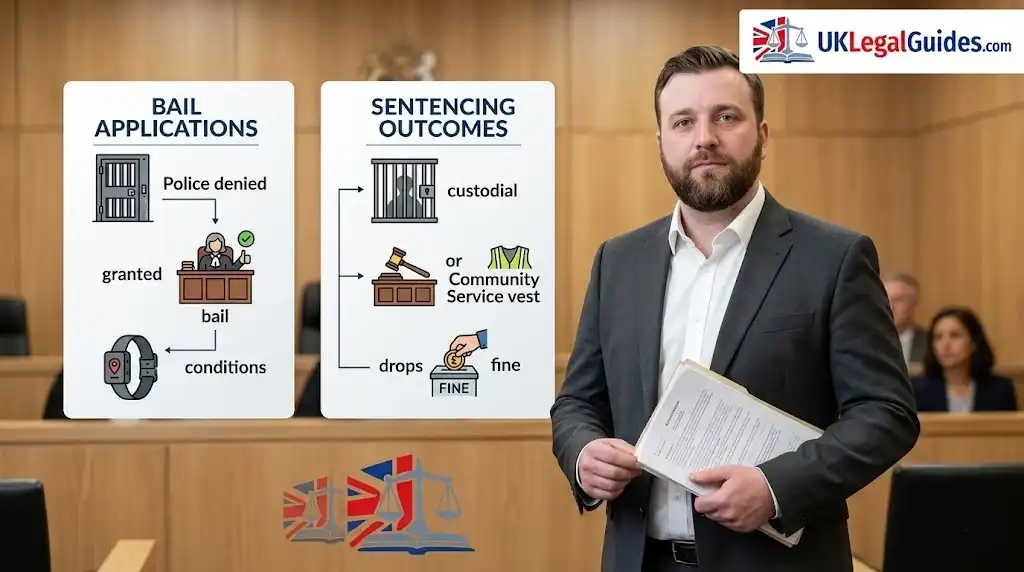
When a person in England and Wales is given a probation order - formally known as a community order or post‑sentence supervision - they must comply with various conditions set by the court and monitored by the probation service. These conditions might include unpaid work, regular meetings with a probation officer, rehabilitation programmes, curfews, electronic monitoring or restrictions on behaviour. If the defendant fails to comply with these requirements, this is treated as a breach of the probation order, and the justice system has established procedures to respond.
This article explains what constitutes a breach of probation, the step‑by‑step process for handling breaches, the role of the probation service and the courts, possible outcomes, and important considerations for those affected.
What Counts as a Breach?
A breach occurs when an offender does not follow one or more of the conditions attached to their probation order. Examples include:
- Failing to attend scheduled meetings with a probation officer;
- Missing unpaid work or rehabilitation sessions;
- Not complying with a curfew or electronic monitoring condition;
- Ignoring restrictions on residence, contact or behaviour; or
- Otherwise breaking the rules set out in the original sentence.
Failing to comply with the order is not automatically a new criminal offence, but it triggers enforcement procedures under the relevant sentencing and probation legislation.
How Probation Services Respond to Breaches
1. Initial Assessment and Warnings
When a suspected breach is identified, a probation officer or supervising agent will assess the circumstances. For a minor or first breach, the officer may issue a formal warning and remind the person of their obligations under the order, emphasising the importance of timely compliance. In some situations, particularly for serious or repeated failures, the case may be referred to court immediately without a warning period.
2. Formal Breach Proceedings
If non‑compliance persists after warnings or is deemed serious from the outset, the probation service can initiate breach proceedings by asking the court that originally imposed the order to address the breach. The defendant is typically required to attend court to explain why they failed to comply.
Probation officers may consider factors such as whether the breach was deliberate, whether there is a “reasonable excuse” like illness or misunderstandings about requirements, and the individual's record of engagement with the order. Providing supporting evidence (for example, medical records) can be important in these circumstances.
What Happens at Court
When breach proceedings reach court, the judge or magistrates assess the evidence and decide how to respond. Several outcomes are available under the law and Sentencing Council guidelines:
1. Added Requirements or Adjustments
If the breach is relatively minor and there has been some compliance with the original order, the court may:
- Extend or add requirements to the probation order, such as extra unpaid work or a curfew;
- Adjust the conditions to improve supervision and encourage compliance.
Sentencing guidelines help courts assess the level of compliance and determine suitable penalties, ranging from additional unpaid work or fines to more intensive supervision.
2. Fines
For certain breaches, the court may impose a fine of up to £2,500 as a proportionate means of enforcing compliance without revoking the order. This is more common where non‑compliance is limited or not wilful.
3. Revocation and Re‑sentencing
Where there is wilful and persistent non‑compliance or repeated breaches, the court may revoke the original probation order. If revoked, the court can re‑sentence the defendant for the same offence that led to the probation order. This can include:
- A more onerous community sentence;
- Suspended sentence orders with additional conditions; or
- Custodial sentences, including immediate imprisonment or a suspended custodial sentence if appropriate under the original sentencing framework. This may occur even if the initial offence was not serious enough to merit custody at first, reflecting the importance of compliance.
Breach of Post‑Sentence Supervision
Some probation orders follow custodial sentences and include a period of post‑sentence supervision. Breaching these conditions can lead to:
- Warnings or escalation by the probation service;
- Return to court for a breach hearing if non‑compliance continues;
- Recall to prison for up to 14 days or longer, depending on the seriousness of the breach and risk to the public. The court may impose additional sanctions like fines or further supervision requirements after a breach hearing.
This reflects the dual goals of enforcing compliance and managing risk while recognising that some breaches may stem from difficulties such as health issues or communication failures.
Factors Courts Consider
When determining how to respond to a breach, courts consider:
- Degree of overall compliance with the order;
- Whether the breach was wilful or inadvertent;
- The defendant's attitude and engagement with probation;
- Any mitigating circumstances, such as health problems or documented barriers to compliance;
- The need to protect the public and to promote behaviour change.
Sentencing guidelines encourage courts to tailor responses proportionately, balancing enforcement with rehabilitation.
Responding to Warnings and Instructions
Breaches often start with a warning from a supervising officer. Defendants are expected to take such warnings seriously, maintain communication with probation staff, and explain legitimate reasons for difficulties in complying. Good engagement and earliest possible explanation can influence how courts view breaches and what sanctions they impose.
Communication and evidence (such as medical notes) are important when disputing whether a breach occurred or explaining why an apparent breach should be excused.
Practical Implications
Support and Legal Advice
Given the serious possible consequences - including custody - individuals facing breach proceedings are usually advised to seek legal advice from a solicitor with experience in criminal and probation matters. This can help in presenting mitigation and explaining circumstances to the court.
Enforcement and Public Protection
The probation service plays a key role in monitoring compliance and ensuring that breaches are detected and addressed promptly. Enforcement is not punitive alone: it is part of a broader strategy to support rehabilitation and protect the community.
Key Takeaways
Breaches of probation orders in England and Wales are taken seriously and handled through a structured process involving probation officers and the courts:
- Initial breach reports often lead to warnings or reassessment of supervision;
- For ongoing or serious non‑compliance, cases are brought back to court;
- Courts can add requirements, impose fines, adjust the order or revoke it and re‑sentence the offender;
- Wilful and persistent breaches can result in custodial sentences, even where the original offence might not have warranted imprisonment.
Courts balance enforcement with rehabilitative aims and consider individual circumstances when deciding what sanctions or adjustments are appropriate.
