
This guide is maintained as a current resource for September 2026 and covers only the laws of England and Wales. Information is for general guidance, not legal advice. Consult a qualified solicitor for advice specific to your situation.
Learn the procedures for reviewing sentences after conviction in England and Wales, including appealing to the Court of Appeal, the unduly lenient sentence scheme, referrals by the Criminal Cases Review Commission, time limits and practical steps for defendants and the public.
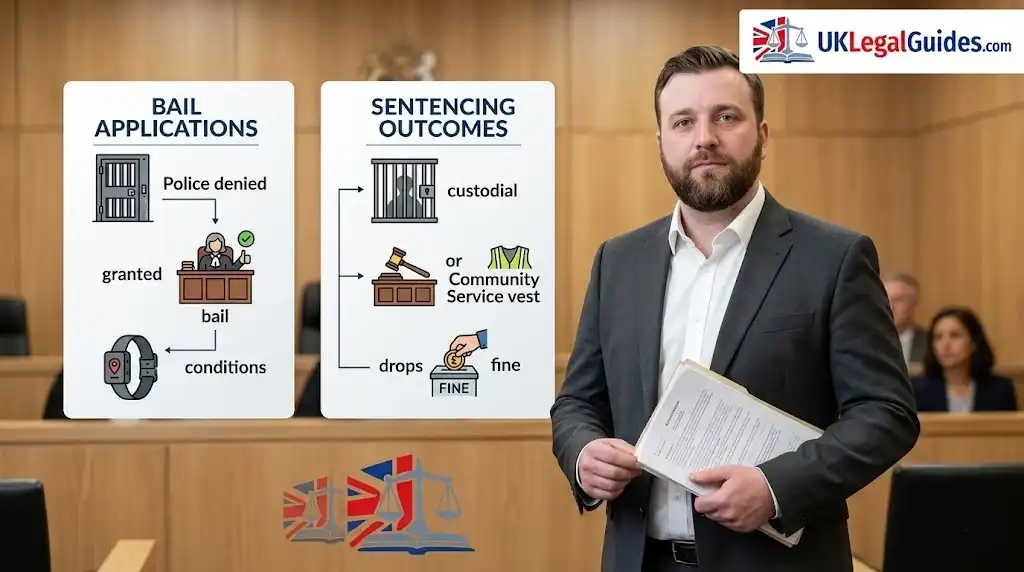
After a criminal conviction in England and Wales, there are formal legal procedures through which sentences can be reviewed, challenged or changed. These procedures ensure fairness in the justice system, correct errors or address sentences that appear unjustly low. Understanding these pathways is essential for defendants, victims, solicitors, students, and anyone seeking clarity on post‑conviction rights and processes. This article explains the procedures step by step, what rights parties have, time limits that apply, and practical considerations.
Why Sentence Reviews Matter
Once a defendant has been convicted and sentenced, the decision may seem final. However, the legal system includes mechanisms to review and potentially correct sentences in defined circumstances. These safeguards protect against miscarriages of justice, ensure sentencing consistency, and allow eligible parties to raise concerns if a sentence appears inappropriate under the law. Different procedures apply depending on who is raising the issue and why.
1. Appeal to the Court of Appeal by the Defendant
What Is an Appeal?
A defendant can formally appeal their sentence if they believe it is inappropriate, unlawful, or manifestly excessive. An appeal is reviewed by the Court of Appeal (Criminal Division), which has the power to confirm, reduce, or, in rare cases, increase a sentence imposed by the Crown Court. Defendants may appeal a sentence whether they pleaded guilty or were found guilty at trial.
How to Initiate a Sentence Appeal
To start an appeal against sentence:
- A defendant must apply for permission to appeal, usually within 28 days of the sentencing.
- This application is made to the Crown Court and, if initially refused, can be renewed before the Court of Appeal.
- The defendant can file the appropriate form and grounds for appeal, setting out why the sentence should be reviewed.
If permission is granted, the Court of Appeal will schedule a hearing where both sides present legal arguments. The appeal focuses primarily on legal errors, misapplication of sentencing guidelines, or unreasonableness of the sentence in law rather than simply disagreement with the outcome.
Possible Outcomes of an Appeal
At the appeal hearing, the Court of Appeal may:
- Uphold the original sentence;
- Reduce the sentence;
- In very limited scenarios, increase the sentence if a legal appeal is made by the prosecution (see below).
If the appeal is refused or dismissed, the original sentence stands.
2. Unduly Lenient Sentence Scheme (Sentence Review by Attorney General)
Overview
If a sentence appears unduly lenient (unreasonably low given the offence and relevant sentencing guidelines), members of the public, victims, or solicitors can ask for a review under the Unduly Lenient Sentence Scheme. This scheme operates because anyone can request a review of certain Crown Court sentences that appear too low.
What Happens in Practice
- A request must be submitted within 28 days of the sentence being passed.
- The request is sent to the Attorney General's Office (AGO) for review.
- The AGO assesses the sentence against the statutory criteria and, if it appears unduly lenient, may refer the case to the Court of Appeal for review.
The Court of Appeal will then decide whether the sentence should be increased, remain unchanged, or whether there is no case for review. Even if the case is referred, the sentence is not automatically changed.
Eligible Offences
Only certain serious offences are within the scheme's scope, such as murder, rape, robbery, serious drug trafficking, serious fraud and other specified crimes.
3. Referral by the Criminal Cases Review Commission (CCRC)
What the CCRC Does
The Criminal Cases Review Commission (CCRC) is an independent body that investigates potential miscarriages of justice, including claims that a sentence is unsafe or unjust. It reviews applications after direct appeal rights have been exhausted.
When a Case Can Be Referred
The CCRC may review a conviction or sentence where there is new evidence or legal arguments not previously considered that could have affected the outcome or sentence. If the CCRC determines that there is a “real possibility” that the conviction or sentence would not be upheld on appeal, it can refer the case back to the Court of Appeal.
Referrals and Appeal Court Action
Once referred, the appeal court independently reviews the case. The court can confirm the sentence, quash it, or substitute a different sentence where appropriate.
4. Crown Court Errors and Immediate Fixes
For relatively recent and minor errors, the Crown Court itself sometimes has limited power to correct or alter its own sentence within a short period. Under certain provisions, a Crown Court can reconsider or adjust a sentence it has just imposed without a formal appeal, provided this happens within 56 days of sentencing. This procedural step allows correction of mistakes before an appeal is necessary.
5. Judicial Review of Sentencing Decisions
Aside from appeals or referrals, it may be possible to seek a judicial review where there has been an error in legal process or irregularity in how a sentence was reached. Judicial review is not a re‑hearing of the case but assesses whether the sentencing decision was made lawfully. It is a separate civil procedure and has a short time frame for application.
Time Limits and Key Requirements
Across these procedures, strict time limits apply:
- Defendant's appeal: usually within 28 days of sentence.
- Unduly lenient sentence requests: must be made within 28 days.
- Crown Court reconsideration: must occur within 56 days of sentence.
- CCRC applications: can be made after appeal rights are exhausted but must demonstrate new evidence or legal issues.
Failure to meet these deadlines may prevent the review from proceeding unless exceptional circumstances apply.
Practical Rights and Considerations
For Defendants
Defendants contemplating a sentence review should:
- Seek legal advice promptly to assess the prospects of appeal or review;
- Note that appeals focus largely on legal errors and misapplication of sentencing principles rather than personal dissatisfaction;
- Be aware that unsuccessful appeals can sometimes result in costs orders or consequences such as added time if bail conditions are breached.
For Victims and Members of the Public
Victims and others can engage in the unduly lenient sentence process. They do not need direct involvement in the case to make a request, but should provide clear details and do so within the statutory time frame.
Common Questions About Sentence Review
Can a sentence be increased on appeal?
Yes. If the prosecution or Attorney General successfully refers a sentence to the Court of Appeal under the unduly lenient scheme, the court may increase the sentence where it was outside the reasonable range.
Is there a cost to apply for a sentence review?
There is no fee for requesting a review of an unduly lenient sentence through the AGO, but legal advice may have associated costs.
What if new evidence emerges after appeal?
The CCRC is the relevant body to review cases with new evidence after appeal rights have been used, potentially referring them back to the court.
Key Takeaways
In England and Wales, sentences can be reviewed through several distinct legal procedures: appeals by the defendant to the Court of Appeal, the Unduly Lenient Sentence Scheme via the Attorney General, referrals by the Criminal Cases Review Commission, and limited self‑review by the Crown Court itself. Strict time limits and procedural requirements apply to each mechanism. These safeguards help uphold fairness in sentencing, maintain public confidence in the criminal justice system, and provide avenues for correcting errors or addressing sentences that do not reflect the seriousness of the offending. Interested parties should act promptly and seek appropriate legal guidance to navigate post‑conviction reviews effectively.
