
This guide is maintained as a current resource for September 2026 and covers only the laws of England and Wales. Information is for general guidance, not legal advice. Consult a qualified solicitor for advice specific to your situation.
Concerned about a bail breach? Learn exactly what happens if conditions are violated, including arrest powers, court procedures, and potential outcomes for the individual.
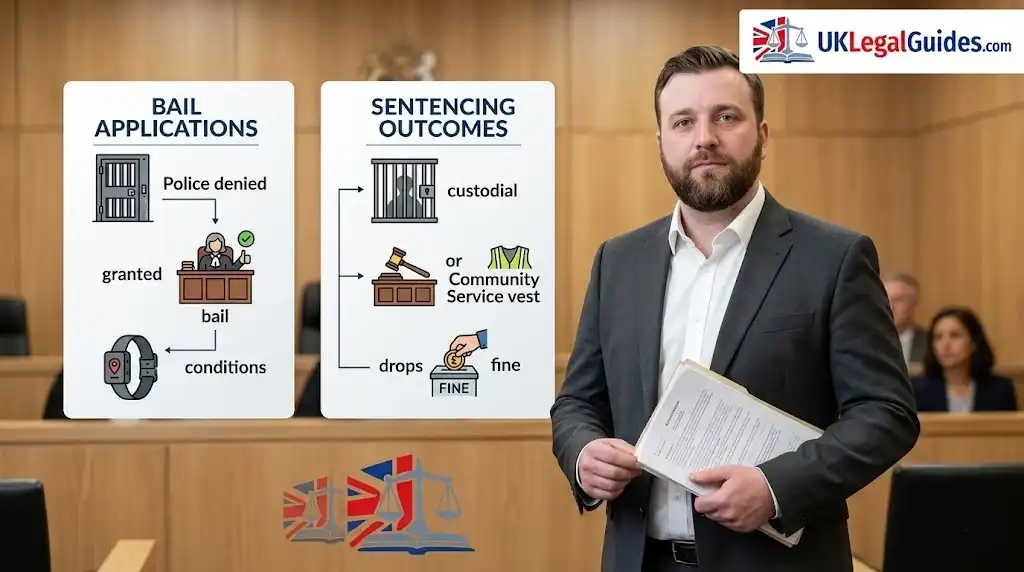
Bail is a temporary release from police custody or court remand while you await further legal proceedings. It often comes with specific conditions designed to manage risk and ensure you attend court, protect the public or victims, and prevent further offences. If those conditions are not followed, this can lead to serious legal consequences under UK law. This article explains what happens when bail conditions are breached, setting out the legal framework, procedural steps, potential outcomes, and what individuals should understand about rights and risks. Information reflects current practice in England and Wales.
Understanding Bail Conditions
Bail is usually granted either:
- By the police during an investigation (often called police or pre-charge bail), or
- By a court after charge or at a hearing (commonly called post-charge or court bail).
Conditions may include:
- Reporting to a police station at set times,
- Curfews or electronic monitoring,
- Exclusion areas,
- Non‑contact orders with certain individuals,
- Surrendering travel documents.
These conditions are imposed to manage risks such as failure to attend court, re‑offending, or interference with witnesses or victims.
What Constitutes a Breach of Bail?
A breach of bail conditions occurs when a person fails to comply with any term attached to their bail order. Examples include:
- Missing a reporting appointment,
- Leaving a designated area when a curfew is in place,
- Contacting a person the conditions prohibit.
Failing to surrender to custody (for example, not attending court) is treated separately and is a criminal offence under section 6 of the Bail Act 1976.
It is important to understand that breach of bail conditions is not itself a separate criminal offence in most cases, unless the breach also involves another offence (such as harassment).
Immediate Consequences of a Breach
If the police suspect that bail conditions have been breached, they have the power to:
- Arrest the individual without a warrant based on reasonable belief that a breach has occurred;
- Take the individual into custody and investigate the circumstances; and
- Bring them before a magistrates' court as soon as reasonably practicable, generally within 24 hours of arrest.
Once before the court, the judge or magistrates will assess whether a breach has occurred and what should happen next.
Court Discretion: Bail After a Breach
When someone is brought back before the court following a breach, the court may decide to:
1. Re‑admit Bail with Same Conditions
If the breach was minor or there are compelling reasons to allow continued release, the court can let the person remain on bail under the same terms.
2. Vary or Tighten Conditions
The court can impose new or stricter conditions, such as:
- Introducing an electronic curfew,
- Increasing the frequency of required reporting,
- Expanding exclusion zones.
3. Revoke Bail and Order Remand
In more serious cases, the court may withdraw bail. The individual will then be held in custody until the next hearing, trial, or sentence. This is often referred to as being remanded in custody.
4. Refuse Bail Altogether
Particularly where there is concern about future compliance, risk to the public, or likelihood of absconding, the court can refuse further bail.
Factors the court considers include:
- The seriousness of the breach,
- Whether the breach was intentional,
- Previous compliance history,
- Risk to victims or public safety.
Impact on Ongoing and Future Proceedings
A bail breach can have effects beyond the immediate hearing:
Effect on the Current Case
- Courts and prosecutors may view non‑compliance as evidence of unreliability.
- If you have been charged, a history of breaking bail can affect the court's willingness to grant continued bail or may be considered at sentencing if you are convicted.
Future Bail Applications
If bail has been revoked due to breach, it becomes more difficult to secure bail in future cases. A breach demonstrates a risk that you will not comply with conditions again.
Separate Criminal Offences
Certain breaches may amount to other offences. For example, contacting a protected person in breach of a non‑contact condition could itself constitute harassment or intimidation under other legislation.
What Happens If You Don't Attend Court?
Failing to attend a court hearing when on bail - without a reasonable excuse - is a criminal offence. This can lead to:
- A warrant for arrest,
- A separate prosecution,
- Potential prison sentence or fine on conviction.
This offence is taken seriously because court attendance is central to the rule of law.
Practical Considerations
Respond Quickly
If you realise you have unintentionally violated a bail condition, contact a qualified criminal defence solicitor as soon as possible. Honest communication can assist in explaining circumstances to the police or court.
Record Reasons
Document the reasons for any potential breach, particularly if it was accidental or unavoidable, as this may be relevant to the court's decision.
Attend All Hearings
Even if no further bail is granted, it is essential to comply with all court requirements to avoid arrest or additional charges.
Key Takeaways
Breaching bail conditions in England and Wales triggers a range of legal responses:
- Police may arrest and return you to custody.
- The court has discretion to re‑grant, vary, or revoke bail.
- Failing to surrender to custody is a separate offence with specific penalties.
- Breaches can impact the current case and future bail applications.
Adherence to bail conditions and professional legal guidance are essential to protect rights and manage risks effectively.
