
This guide is maintained as a current resource for September 2026 and covers only the laws of England and Wales. Information is for general guidance, not legal advice. Consult a qualified solicitor for advice specific to your situation.
Learn how a suspended sentence works in England and Wales. This detailed guide explains when courts can impose a suspended custodial sentence, how the operational period and conditions work, what happens on breach, and key practical considerations for defendants and their representatives.
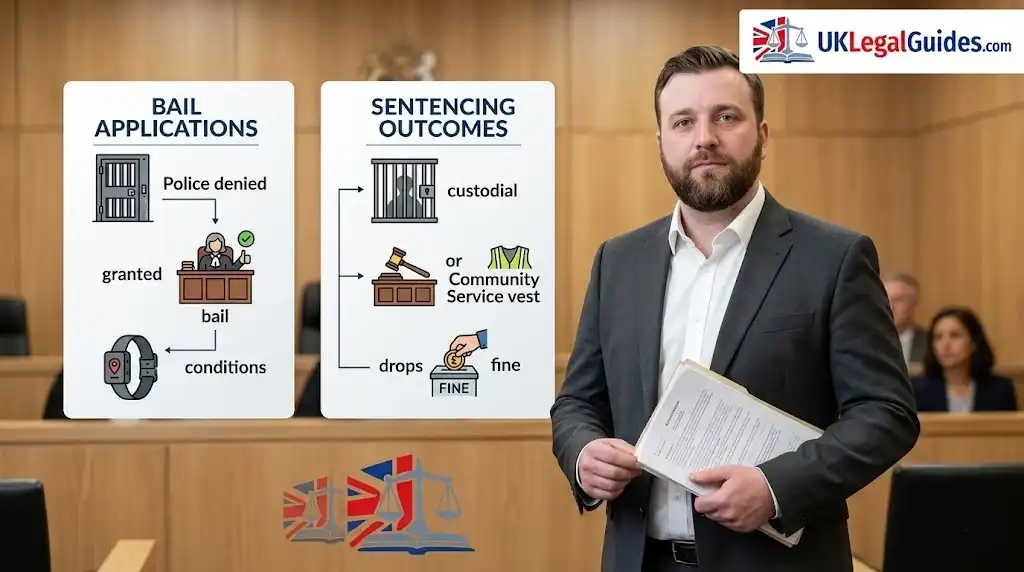
When someone is convicted of a criminal offence in England and Wales, a court may decide on various forms of punishment. One such option is a suspended sentence, officially known as a Suspended Sentence Order (SSO). A suspended sentence combines features of imprisonment and community‑based punishment: the person receives a custodial sentence, but it is deferred and not served immediately provided certain conditions are met. This article explains in detail how suspended sentences operate, when they can be imposed, what conditions might apply, and what happens if those conditions are not met. The focus is on clear, step‑by‑step guidance for people without a legal background, as well as accurate reference for solicitors.
What Is a Suspended Sentence?
A suspended sentence is a custodial sentence that a court hands down but does not immediately enforce. Instead of going straight to prison, the person remains in the community during a defined period called the operational period. If they comply with any court‑imposed conditions and do not commit another offence during that time, they will not go to prison for the original sentence.
Suspended sentences are used where custody is appropriate in principle but there are reasons to allow the offender to remain at liberty, often in combination with rehabilitative measures.
Legal Framework and When Suspended Sentences Apply
Custodial Sentence Threshold
Under English law, courts may suspend a custodial sentence of between 14 days and 2 years (or up to six months in a magistrates' court) provided that:
- custody is appropriate for the offence; and
- the court determines that suspending the sentence is justified based on the individual circumstances.
Sentencing guidelines emphasise that a suspended sentence should not be imposed simply as a more severe form of a community order; the offender must genuinely require custody in principle.
Operational Period
The operational period is the length of time the sentence is suspended, usually between 6 months and 2 years. During this period, the custodial sentence can be enforced if the individual fails to meet the conditions or commits another offence.
Conditions Attached to a Suspended Sentence
When suspending a sentence, the court may attach up to 13 types of requirements to the suspended sentence order. These are designed to support rehabilitation, protect the public and ensure compliance with the law. Common conditions include:
- Unpaid work requirements (community service);
- Curfews and electronic monitoring;
- Rehabilitation activities, such as substance misuse or anger management programmes;
- Supervision by probation with regular check‑ins;
- Residence requirements or exclusion from certain locations;
- Treatment requirements for drug, alcohol or mental health issues.
These conditions operate similarly to those in a community order but are specifically linked to the suspended sentence. Compliance with these conditions is central to maintaining the suspended status of the sentence.
How Suspended Sentences Work in Practice
Imposition in Court
At sentencing, the judge or magistrate will:
- Determine that custody is appropriate in principle;
- Decide that suspending the custodial sentence is justified given the individual's circumstances;
- Set the length of the custodial sentence and the operational period for suspension;
- Specify any conditions or requirements attached to the order; and
- Explain clearly how the suspended sentence works and what will happen if conditions are breached.
The court's reasons for suspending the sentence and the requirements imposed must reflect the seriousness of the offence and the offender's prospects for rehabilitation.
Supervision and Enforcement
While the sentence is suspended, the probation service typically monitors compliance with the requirements. A sentence plan may be prepared to outline how conditions will be met and what support is available.
What Happens If Conditions Are Breached
A suspended sentence is both a punishment and a deterrent. If during the operational period the offender:
- commits a new offence; or
- fails to comply with the conditions of the order,
they may be brought back to court.
Activation of the Custodial Sentence
At a breach hearing, the court has several options:
- Activate the original custodial sentence in full: the individual serves the prison term originally imposed;
- Activate part of the custodial sentence: if there has been substantial compliance with conditions, the court may activate a shorter custodial term;
- Modify the suspended sentence by imposing more stringent requirements or extending the operational period; or
- Revoke the suspension entirely and impose an alternative sanction.
Activation is likely where the breach is serious or the person has committed a further offence during the operational period.
Consequences of New Offences During Operational Period
If a new criminal conviction occurs during the operational period, the suspended sentence will normally be activated in addition to any sentence received for the new offence. Whether the custodial sentence is served in full or in part depends on the court's assessment of the breach and surrounding circumstances.
Practical Considerations and Rights
Rehabilitation Focus
Suspended sentences provide an opportunity for an individual to fulfill rehabilitative requirements, such as attending treatment programmes or engaging in community service. This is intended to reduce the likelihood of reoffending and address underlying issues connected with the original offending behaviour.
Legal Advice and Representation
Because suspended sentences involve both punitive and rehabilitative elements, professional legal advice is important. Defence representatives can argue for conditions that support rehabilitation or challenge the activation of a sentence on breach. Seeking qualified legal advice early improves understanding of rights and obligations.
Key Takeaways
A suspended sentence in England and Wales is a custodial sentence imposed by a court but held in abeyance during a specified operational period, provided the individual complies with all conditions and commits no further offences. Key points include:
- Suspended sentences apply to custodial terms of 14 days to 2 years, with courts weighing whether suspension is justified in each case.
- The operational period lasts up to two years and is when compliance is assessed.
- Courts may attach community‑focused requirements to the order, such as unpaid work or rehabilitation programmes.
- Breach of requirements or commission of a further offence will usually result in activation of the custodial sentence.
Understanding how suspended sentences work helps demystify this sentencing option and clarifies the balance between punishment, rehabilitation and public protection in the criminal justice system.
