
This guide is maintained as a current resource for September 2026 and covers only the laws of England and Wales. Information is for general guidance, not legal advice. Consult a qualified solicitor for advice specific to your situation.
Discover when exclusion clauses in consumer contracts are unenforceable under UK law. This guide explains how the Consumer Rights Act 2015 treats prohibited and unfair exclusion terms, examples of unenforceable clauses, statutory protections for consumers in England and Wales, and practical steps for challenging unfair contract terms.
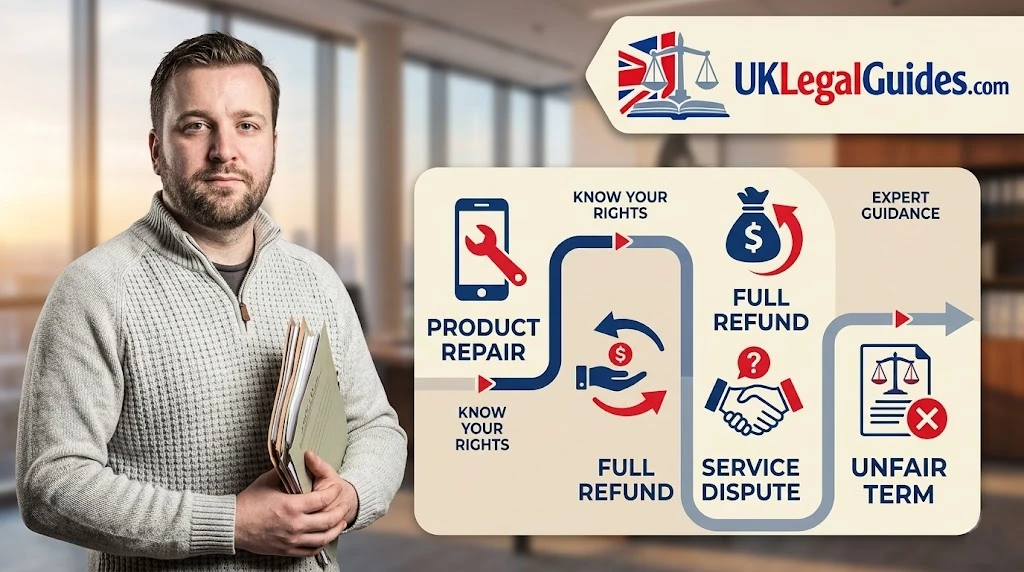
Exclusion clauses are contractual terms that aim to limit or exclude a trader's liability for loss, damage, breach of contract or negligence. While these clauses are common in consumer contracts in England and Wales, they are not always legally enforceable. The law imposes strict rules about when exclusion clauses are valid, when they are unfair and unenforceable, and how consumer protections under statute override contractual wording. This guide explains, with reference to relevant UK law, when exclusion clauses become unenforceable, what protections consumers have, how disputes are resolved, and practical steps if you encounter such clauses.
Introduction – What Is an Exclusion Clause?
An exclusion clause is a term inserted into a contract by a trader that seeks to restrict or eliminate their legal liability. Common examples include:
- “The trader is not liable for any loss, damage or defect.”
- “No compensation can be claimed for consequential losses.”
- Clauses denying liability for negligence or limiting refunds.
While lawful in principle, such clauses are subject to statutory control in consumer contracts. The Consumer Rights Act 2015 (CRA) governs the fairness and enforceability of exclusion clauses in contracts between a trader and a consumer. When an exclusion clause is judged unfair or prohibited outright by statute, it is unenforceable against the consumer.
1. Legal Framework – Consumer Rights Act 2015
The Consumer Rights Act 2015 sets out the legal framework for enforcing or rejecting exclusion clauses in consumer contracts. Part 2 of the CRA focuses on “unfair terms and notices”. Under section 62, a term in a consumer contract is unfair (and therefore unenforceable) if it:
- Is contrary to the requirement of good faith;
- Causes a significant imbalance in the parties' rights and obligations;
- Detrimentally affects the consumer.
The burden of fairness is assessed by reference to the contract's subject matter, all terms, and the circumstances when the contract was agreed. A clause deemed unfair is not binding on the consumer, although the consumer may choose to rely on it if beneficial.
2. When Exclusion Clauses Are Always Unenforceable
Certain exclusion clauses cannot be enforced against consumers under any circumstances. The CRA expressly prohibits them, meaning they are automatically unenforceable. The most significant statutory bars include:
a. Excluding Liability for Death or Personal Injury
A trader cannot exclude or limit liability for death or personal injury resulting from negligence. This applies even if the consumer knowingly agreed to the clause. The provision applies to all forms of contractual or notice‑based exclusion attempts.
This reflects a fundamental public policy protection: consumers should not contract out of basic safety obligations owed by traders.
b. Excluding Statutory Consumer Rights
Clauses that seek to exclude or restrict core consumer rights implied by the CRA - such as the right to goods that are satisfactory quality, fit for purpose or as described, and the right to services performed with reasonable care and skill - are unenforceable. The CRA disapplies any term that would negate these statutory protections.
This means a retailer cannot lawfully contract out of its legal obligations, even if the contract attempts to do so in terms and conditions.
3. When Clauses Are Unenforceable as Unfair Terms
Beyond outright prohibitions, many exclusion clauses are unenforceable because they are “unfair” under the CRA fairness test. Key principles include:
a. Significant Imbalance in Rights and Obligations
A term is unfair when it gives the trader disproportionately broad protection or shifts significant risk to the consumer. Examples include:
- Clauses that allow the trader to perform entirely different obligations from those reasonably expected;
- Terms that permit unilateral changes to contract terms after agreement; or
- Provisions that impose disproportionate penalties on the consumer for minor breaches.
Such clauses create an imbalance that a court or tribunal will likely find unfair and therefore unenforceable against the consumer.
b. Hidden or Non‑Transparent Clauses
The CRA requires contract terms to be transparent and presented clearly. A term buried in small print or obscure language is more likely to be judged unfair. Ambiguous wording is interpreted in favour of the consumer.
A trader cannot rely on a hidden term to exclude liability if the average consumer would not reasonably be aware of it at the time of contracting.
4. Interaction With Other Consumer Protections
Exclusion clauses cannot override mandatory statutory protections. In consumer contracts:
- Implied terms for goods and services under the CRA cannot be contracted out.
- Traders cannot exclude contractual liability that would frustrate the core purpose of consumer protections.
- A clause that interferes with a consumer's right to seek refunds, repairs, replacements, price reductions or other remedies for non‑conformity is likely prejudicial and unfair.
Even if a clause is phrased broadly, courts in England and Wales will not allow it to strip consumers of essential statutory rights.
5. Consequences of an Unenforceable Exclusion Clause
When a clause is unenforceable:
- It does not bind the consumer, and cannot be relied on by the trader in dispute proceedings.
- The rest of the contract remains valid so far as practicable; the invalid clause is severed rather than rendering the entire contract void.
- The consumer can proceed with claims based on express and implied terms that remain in force.
For example, if a trader tries to exclude liability for defective goods, that exclusion will be unenforceable and the consumer can still claim remedies under the CRA.
6. Dispute Resolution and Legal Recourse
If you believe an exclusion clause in a consumer contract is unenforceable:
a. Communicate and Document
Write to the trader outlining why the clause is unfair or prohibited, citing relevant statutory provisions. Keep copies of all correspondence and evidence.
b. Use Alternative Dispute Resolution
Many traders belong to trade associations or certified ADR schemes. Mediation or an ombudsman may resolve disputes without court action.
c. County Court or Tribunal Claims
If necessary, you can bring a claim through the small claims track in the County Court or applicable tribunal. Evidence of the unfair clause and its impact will support your position.
7. Examples of Unenforceable Exclusion Clauses
Practical examples where exclusion clauses are typically unenforceable include:
- A term stating the trader is not responsible for any loss from defective goods or services.
- A clause reducing liability below what the statutory remedies under the CRA provide.
- Terms barring claims for personal injury due to negligence.
- Provisions allowing the trader to alter obligations without consumer consent or reasonable notice.
These clauses go beyond reasonable limitation and are likely to be struck down in legal proceedings.
8. Common Questions and Misconceptions
Can an Exclusion Clause Ever Be Fair?
Yes. Clauses that reasonably limit liability (for example, a reasonable cap on damages for minor loss) and are transparent may be upheld. However, they must not undermine statutory consumer rights.
Does Signing a Contract Mean You Accept All Terms?
No. Even if a consumer signs or agrees to terms, an unfair or prohibited exclusion clause can still be unenforceable. Statutory protections override contractual agreement where necessary.
Conclusion
Exclusion clauses in consumer contracts in England and Wales are not automatically enforceable. Under the Consumer Rights Act 2015, clauses that attempt to exclude liability for death or personal injury, or that interfere with core statutory consumer rights, are automatically unenforceable. Other terms may be unenforceable if they are unfair, cause significant imbalance, or are non‑transparent. Understanding when exclusion clauses are unenforceable empowers consumers to assert their legal rights effectively and pursue remedies when traders attempt to rely on unfair contractual protections.
