
This guide is maintained as a current resource for September 2026 and covers only the laws of England and Wales. Information is for general guidance, not legal advice. Consult a qualified solicitor for advice specific to your situation.
A comprehensive guide explaining how to challenge hidden fees in consumer contracts under UK law. Learn how to identify unfair charges, relevant legal protections, steps to dispute hidden fees with traders and regulators, time limits, and what remedies are available in England and Wales.
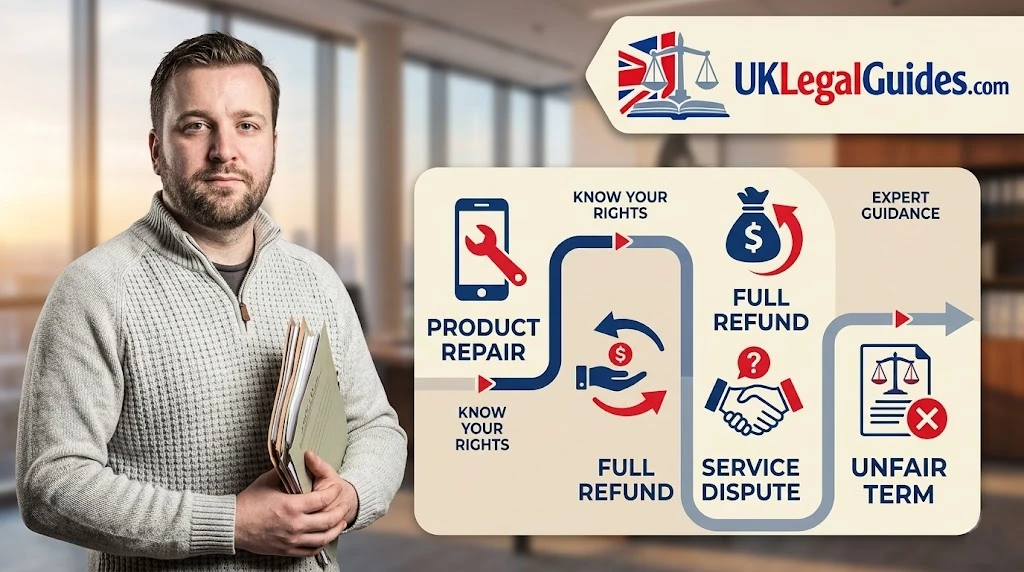
Hidden fees and charges in consumer contracts can result in unexpected costs, financial loss, and unfair outcomes. Whether they appear in gym contracts, subscription services, holiday bookings, utilities, or other agreements, hidden fees are often buried in complex terms and may not be clearly disclosed at the point of sale. UK consumer law provides protections against such practices and gives individuals the ability to challenge unfair terms, including hidden fees that harm consumers. This article explains the legal framework, how to identify hidden fees, steps to challenge them, relevant time limits and legal processes, and options if a dispute arises. It is intended to support consumers, students, and solicitors in understanding their rights and practical actions available under English and Welsh law.
1. Understanding Hidden Fees in Consumer Contracts
A hidden fee is any charge or cost that a business includes in a contract but does not make sufficiently clear to the consumer before the contract is agreed. These may include administrative fees, automatic renewal fees, early cancellation penalties, or charges for services not clearly explained. Hidden fees can arise when terms are not transparent or are buried in small print with insufficient prominence or clarity.
Under UK law, contractual terms, including fees and charges, must be transparent and fair. A hidden or poorly explained fee that creates a significant imbalance in rights and obligations may be unenforceable. This protective framework is set out primarily under the Consumer Rights Act 2015 (CRA 2015) and is supported by enforcement through courts and regulators such as the Competition and Markets Authority (CMA).
2. Legal Framework for Challenging Hidden Fees
2.1 Consumer Rights Act 2015 – Unfair Contract Terms
The Consumer Rights Act 2015 imposes a fairness test on standard terms in consumer contracts. A term (including a fee) may be unenforceable if it:
- is not transparent or prominent in the contract;
- creates a significant imbalance in the rights and obligations of consumer and trader to the detriment of the consumer; or
- is contrary to the requirement of good faith.
Hidden fees or charges that are not brought reasonably to the consumer's attention before the contract is agreed are likely to be scrutinised under these fairness requirements and may be found unfair.
2.2 Consumer Protection from Unfair Trading Regulations 2008
These regulations prohibit misleading omissions - where a trader fails to disclose material information necessary to make an informed choice. Omission of a required fee or cost can itself be an unlawful unfair commercial practice if it would influence a consumer's decision to enter the contract.
2.3 Competition and Markets Authority and Trading Standards
Both the CMA and local Trading Standards authorities have powers to investigate unfair terms and take enforcement action against businesses that use unfair contract terms or hidden costs. Consumers can report suspected unfair terms to regulators who may pursue action independently or in parallel with individual complaints.
3. Identifying Hidden Fees and Unfair Terms
Identifying hidden fees requires careful review of the contract, including pre‑contractual information, small print, notices, and any marketing material. Key indicators that a fee may be hidden or unfair include:
- fees not clearly stated or only revealed after the contract is accepted;
- charges that appear disproportionate to the service or likely cost incurred by the trader;
- terms that allow the trader to vary fees after the contract begins without adequate consumer notice or rights to cancel;
- use of vague or ambiguous language about fees and costs.
Fees that were not disclosed prior to agreement but imposed after can be subject to challenge if they are not transparent and fair.
4. Steps to Challenge Hidden Fees
4.1 Review the Contract and Evidence
Begin by obtaining a copy of the contract, including all associated terms and notices. Note exactly where and how the fee was disclosed (or not). Hidden fees are more easily challenged when clear evidence shows they were not adequately brought to your attention before you agreed to the terms.
4.2 Write to the Trader
Contact the business in writing to explain that you consider the fee unfair or hidden, referring to the specific terms and why they are not transparent. Include relevant dates, the amount charged, and any supporting documents. You can state that you believe the term is unenforceable under the Consumer Rights Act 2015.
4.3 Complain to Regulators
If the business does not respond satisfactorily, you can report the issue to the Competition and Markets Authority (CMA) or your local Trading Standards office. These regulators can investigate and potentially take action against the trader's contract terms.
4.4 Seek Legal Remedies
If informal complaint and regulatory reporting do not resolve the issue, you may consider legal action through the county court or a consumer tribunal. A court can assess whether the term is unfair and, if so, may rule it unenforceable, potentially entitling you to reclaim any improperly charged amounts. In some cases, alternative dispute resolution is also an option prior to formal court proceedings.
5. Time Limits and Practical Considerations
There is no fixed universal limitation period solely for challenging hidden fees, but general limitation rules apply depending on the remedy pursued. For example, if seeking a repayment of charges through a civil claim, the limitation period under the Limitation Act 1980 typically requires claims within six years from the date the charge became due. Claims based on misrepresentation may have shorter limitation periods. Always check current limitation provisions relevant to your case.
Gathering evidence early - including contracts, correspondence, and records of when fees were imposed - strengthens any dispute or claim.
6. Typical Hidden Fee Scenarios
Hidden fees can be found in many consumer contexts:
- Subscription or auto‑renewal fees not made clear at sign‑up;
- Cancellation charges in gym or club contracts that are disproportionate;
- Service charges in hospitality, parking or travel contracts not disclosed up front;
- Administrative fees added after acceptance of a credit agreement or service contract.
In each case, the same legal principles apply: if the fee was not properly disclosed or is imbalanced to the consumer's detriment, it may be challenged as unfair.
7. Common Questions About Challenging Hidden Fees
What if the business says I agreed to the fee?
A business may argue you accepted the terms, but acceptance only binds you if the term was both transparent and prominent. Hidden fees that were not brought to your attention are open to challenge.
Can I cancel the contract entirely?
If a hidden fee relates to a central component of the contract and is found to be unfair, a court may treat the term as unenforceable and may allow you to disregard that term. This can sometimes affect the validity of the contract overall, depending on the circumstances and what remedy the court deems appropriate.
Do I need a solicitor?
For significant disputes or where large sums are involved, seeking advice from a solicitor with experience in consumer law can help clarify options and improve your prospects in formal complaints or court actions.
Conclusion
Hidden fees in consumer contracts are prohibited if they are not transparent and create an unfair imbalance to the detriment of the consumer. UK law, particularly the Consumer Rights Act 2015 and consumer protection regulations, offers mechanisms for consumers to challenge such fees. By carefully reviewing contracts, documenting where fees were not properly disclosed, making written complaints, and escalating concerns to regulators or courts where necessary, consumers can protect their rights and seek redress. Early action and clear evidence improve the chances of successful resolution, and statutory protections help ensure traders provide clear and fair terms in consumer agreements.
