
This guide is maintained as a current resource for September 2026 and covers only the laws of England and Wales. Information is for general guidance, not legal advice. Consult a qualified solicitor for advice specific to your situation.
Learn about remedies for breach of contract in UK consumer law. This guide explains refunds, repairs, compensation, and your legal rights under the Consumer Rights Act 2015.
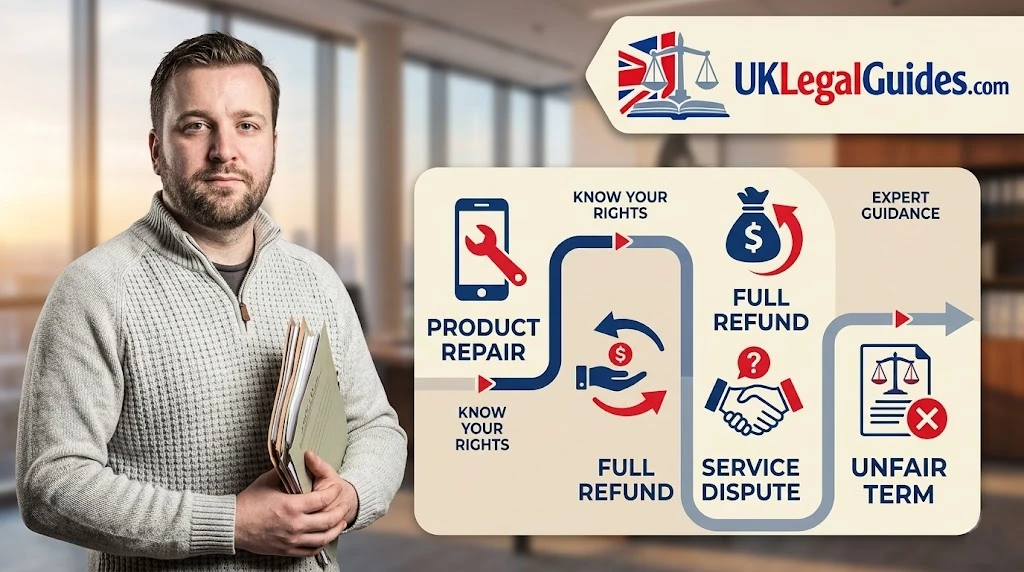
When a trader fails to meet their legal obligations, consumers are entitled to remedies. These remedies are the legal solutions available when a contract has been breached, and they aim to correct the problem or compensate for loss.
In England and Wales, remedies for consumer contract breaches are primarily governed by the Consumer Rights Act 2015, alongside established principles of contract law. This guide explains the different types of remedies available, how they operate in practice, and what consumers should consider before pursuing a claim.
What Is a Remedy in Consumer Law?
A remedy is the legal response to a breach of contract. Its purpose is to:
- Put the consumer in the position they would have been in if the contract had been properly performed
- Provide a fair outcome where something has gone wrong
- Encourage compliance with consumer protection laws
Remedies may involve repair, replacement, refunds, or financial compensation depending on the nature and seriousness of the breach.
Legal Framework: Consumer Rights Act 2015
The Consumer Rights Act 2015 sets out statutory remedies that automatically apply to most consumer contracts involving goods, services, and digital content.
For goods, the law requires that they must:
- Be of satisfactory quality
- Be fit for purpose
- Match their description
If these standards are not met, the consumer has specific remedies, structured in a clear hierarchy.
Remedies for Faulty Goods
Short-Term Right to Reject (30 Days)
Consumers have a 30-day right to reject faulty goods and obtain a full refund.
Key points:
- The 30-day period begins from delivery
- The fault must be present at the time of delivery
- The consumer is entitled to a full refund, not store credit
This is one of the strongest consumer protections available.
Repair or Replacement
If the 30-day period has passed, the consumer can request:
- A repair, or
- A replacement
The trader must carry this out:
- Within a reasonable time
- Without significant inconvenience to the consumer
The trader can choose the cheaper option if both are viable.
Final Right to Reject or Price Reduction
If repair or replacement fails, the consumer may:
- Reject the goods and receive a refund, or
- Keep the goods and request a price reduction
Refunds may be reduced to reflect usage if the claim is made after six months (except for certain goods such as vehicles).
Remedies for Services
Where services are not provided with reasonable care and skill, the law provides two main remedies:
Repeat Performance
The trader must:
- Re-perform the service
- Do so at no additional cost
- Complete it within a reasonable time
Price Reduction
If repeat performance is not possible or fails, the consumer can claim:
- A reduction in price, which may be up to 100%
This reflects the diminished value of the service provided.
Remedies for Digital Content
For digital products (such as downloads or streaming services), remedies include:
- Repair or replacement of defective digital content
- Price reduction if the issue cannot be resolved
Where faulty digital content damages a device or other data, the consumer may also claim compensation.
Common Law Remedies for Breach of Contract
In addition to statutory rights, traditional contract law provides further remedies.
Damages (Compensation)
Damages are the most common remedy and aim to compensate for financial loss.
They may include:
- Cost of repairs or replacement
- Loss of value
- Additional expenses caused by the breach
Losses must be:
- Caused by the breach
- Reasonably foreseeable
Termination of Contract
For serious breaches, consumers may:
- End the contract
- Refuse further performance
This is usually available where the breach is fundamental.
Specific Performance
In rare cases, a court may order a trader to:
- Carry out their contractual obligation
This remedy is uncommon in consumer disputes and typically reserved for unique situations.
Choosing the Appropriate Remedy
The appropriate remedy depends on:
- The type of contract (goods, services, or digital content)
- The seriousness of the breach
- The timing of the claim
For example:
- A minor defect may justify a repair
- A serious fault may justify a full refund
Understanding the hierarchy of remedies is important when asserting your rights.
Time Limits for Seeking Remedies
Different timeframes apply depending on the remedy:
- 30 days for the short-term right to reject
- Six months where faults are presumed to have existed at delivery
- Six years to bring a breach of contract claim in court
Acting promptly improves the likelihood of success and preserves evidence.
Practical Steps to Enforce Your Rights
If a trader breaches a contract, consumers should:
- Contact the trader and explain the issue clearly
- State the remedy sought (repair, replacement, refund, or compensation)
- Provide evidence (receipts, photos, correspondence)
- Allow reasonable time for resolution
- Send a formal letter before action if necessary
- Consider issuing a claim in the County Court
Many disputes are resolved without court action when consumers clearly assert their rights.
Risks and Limitations
While remedies are widely available, there are important limitations:
- Traders may dispute whether a fault existed
- Evidence may be insufficient to prove the claim
- Some remedies depend on giving the trader an opportunity to fix the issue
- Compensation is limited to reasonably foreseeable losses
Consumers also have a duty to mitigate their losses, meaning they should not allow avoidable costs to increase.
Common Questions
Can I insist on a refund instead of a repair?
Only within the 30-day short-term right to reject, or if repair/replacement fails.
Can a trader refuse a repair?
A trader may refuse if repair is impossible or disproportionate compared to replacement.
What if the trader ignores my request?
You may escalate the matter by:
- Sending a letter before action
- Starting a small claims case
Are refunds always full?
Not always. Refunds may be reduced to reflect usage in some circumstances after the initial period.
Final Thoughts
Remedies for consumer contract breaches are designed to provide fair and practical solutions when things go wrong. The law offers a structured system, particularly under the Consumer Rights Act 2015, giving consumers clear rights to:
- Reject faulty goods
- Request repair or replacement
- Seek price reductions or compensation
Understanding these remedies, their limitations, and how to enforce them enables consumers to resolve disputes effectively and, where necessary, pursue legal action with confidence.
