
This guide is maintained as a current resource for September 2026 and covers only the laws of England and Wales. Information is for general guidance, not legal advice. Consult a qualified solicitor for advice specific to your situation.
Learn how to claim a price reduction for faulty goods under UK law. This guide explains your rights, how reductions are calculated, and the steps to take under the Consumer Rights Act 2015.
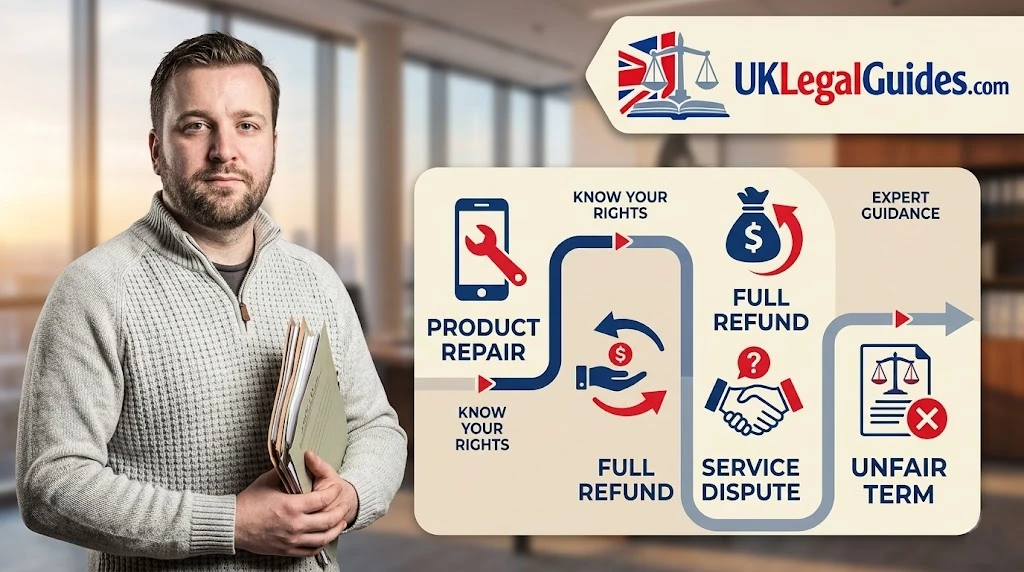
When goods are faulty and cannot be satisfactorily repaired or replaced, consumers in England and Wales may be entitled to a price reduction. This is a key remedy under the Consumer Rights Act 2015 and forms part of a structured system designed to resolve disputes between consumers and retailers.
This article explains when a price reduction can be claimed, how it is calculated, the legal process involved, and the practical steps consumers can take to enforce their rights. It provides a clear and detailed guide suitable for both general readers and those seeking a deeper understanding of consumer law.
Legal Framework: The Consumer Rights Act 2015
The Consumer Rights Act 2015 is the primary legislation governing consumer purchases. It establishes that goods must be:
- Of satisfactory quality
- Fit for purpose
- As described
If goods fail to meet these standards, consumers are entitled to remedies through a tiered system, including:
- Short-term right to reject (within 30 days)
- Repair or replacement
- Price reduction or final right to reject
A price reduction is typically a later-stage remedy, used when earlier remedies are unavailable or unsuccessful.
What Is a Price Reduction?
A price reduction is the legal right to require the retailer to reduce the purchase price by an appropriate amount, which may include a partial or full refund.
Key points:
- The reduction reflects the difference in value between what was promised and what was actually received
- It may be up to 100% of the purchase price in serious cases
- It allows the consumer to keep the goods rather than return them
When Can You Claim a Price Reduction?
You can usually claim a price reduction in the following situations:
1. After a Failed Repair or Replacement
If the retailer has attempted to repair or replace the goods and:
- The attempt fails, or
- The same fault persists
You may move to a price reduction or final rejection.
2. When Repair or Replacement Is Impossible
A price reduction may apply if:
- The goods cannot be repaired
- A replacement is unavailable (e.g. discontinued product)
3. When Repair or Replacement Causes Significant Inconvenience
If the retailer fails to:
- Act within a reasonable time, or
- Avoid significant inconvenience
You may claim a price reduction instead.
How Is a Price Reduction Calculated?
The law does not set a fixed formula. Instead, the reduction must be “appropriate” in the circumstances.
General Principle
The reduction reflects:
- The difference between the value of the goods as supplied and
- The value they would have had if they met the contract
Practical Examples
- Minor cosmetic defect → small partial refund
- Reduced functionality → moderate reduction
- Goods unusable → full refund
In some cases, a deduction may reflect the benefit already received from the goods.
Step-by-Step: How to Claim a Price Reduction
Step 1: Confirm Your Eligibility
Ensure that:
- The goods are faulty, not as described, or not fit for purpose
- A repair or replacement has failed, or is not possible
Step 2: Gather Evidence
Collect:
- Proof of purchase
- Evidence of the fault (photos, videos)
- Records of repair attempts or communications
This evidence is essential if the claim is disputed.
Step 3: Contact the Retailer
Write to the retailer clearly stating:
- The nature of the fault
- The history of repair or replacement attempts
- That you are seeking a price reduction under the Consumer Rights Act 2015
Specify the amount you believe is reasonable and explain why.
Step 4: Propose a Reasonable Reduction
When suggesting an amount:
- Consider how much the fault reduces the product's value
- Be realistic and proportionate
For example:
- A minor issue may justify 10–20%
- A major fault may justify a substantial or full refund
Step 5: Allow the Retailer to Respond
The retailer should:
- Consider your request
- Respond within a reasonable time
If agreed:
- The refund must be issued within 14 days and without fees
What If the Retailer Refuses?
If the retailer rejects your claim:
1. Escalate the Complaint
- Use the retailer's formal complaints process
- Refer clearly to your statutory rights
2. Use Alternative Dispute Resolution (ADR)
ADR schemes can provide independent resolution without going to court.
3. Bring a Court Claim
As a last resort, you may:
- Issue a claim in the County Court
- Use the small claims track for lower-value disputes
You will need to present:
Time Limits for Claims
Consumers generally have up to six years to bring a claim for breach of contract in England and Wales.
However:
- Claims become harder to prove over time
- Evidence is particularly important after six months
Common Issues and Disputes
Disagreement Over Value
Retailers may dispute the amount of reduction. This is often the central issue in price reduction claims.
Partial Use of Goods
If the consumer has used the goods, the retailer may argue for a reduced refund.
Multiple Repair Attempts
Consumers should be cautious about allowing repeated repairs, as this may delay access to further remedies.
Risks and Practical Considerations
- The law does not define exact percentages for reductions
- Evidence is critical in proving loss of value
- Retailers may resist claims or offer low settlements
- Court proceedings may involve time and cost
Consumers should aim to resolve disputes early where possible.
Common Questions from our Readers
Can I claim a full refund as a price reduction?
Yes, if the goods are effectively worthless or unusable.
Do I have to return the goods?
No, a price reduction allows you to keep them.
Can I skip repair and go straight to a price reduction?
Usually no, unless repair or replacement is impossible or impractical.
Final Thoughts
The right to a price reduction is an important safeguard when faulty goods cannot be satisfactorily repaired or replaced. The key points are:
- It is a secondary remedy under the Consumer Rights Act 2015
- It applies after failed or impractical repair or replacement
- The reduction must reflect the loss in value of the goods
- Consumers can enforce this right through complaints, ADR, or court action
Understanding how price reductions work enables consumers to negotiate effectively and ensures that they are not left bearing the cost of defective goods.
