
This guide is maintained as a current resource for September 2026 and covers only the laws of England and Wales. Information is for general guidance, not legal advice. Consult a qualified solicitor for advice specific to your situation.
Learn how to get a refund in England and Wales if a trader refuses, including your statutory rights under the Consumer Rights Act 2015, how to make a valid claim, steps to escalate complaints, time limits, card chargebacks and Section 75, and what to do if informal resolution fails.
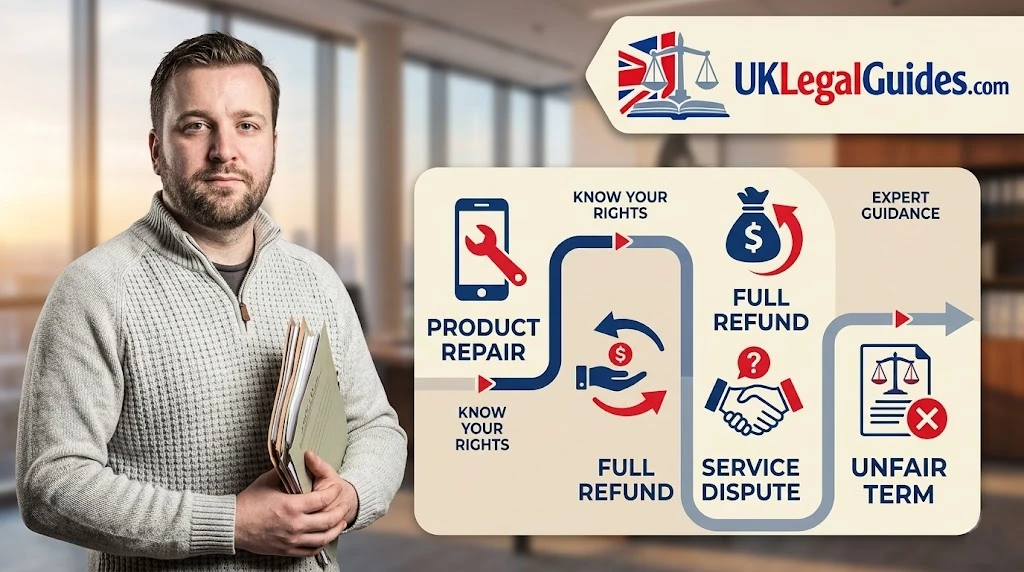
When a trader won't give you a refund, it can feel frustrating and unfair. In England and Wales, consumer law gives you clear statutory rights that a trader cannot contract out of by saying “no refunds” on receipts, signs, or terms and conditions. This article explains how those rights work, what to do if a trader refuses, how to escalate your complaint, and what legal options are available if the dispute is not resolved.
Introduction
Purchasing goods, services or digital content from a business creates a legally binding contract. The Consumer Rights Act 2015 and other consumer protection rules set minimum standards and give you remedies if those standards are not met. One of the most important remedies is a refund in situations where the goods or service breach legal requirements. A trader's refusal to refund you when your statutory rights apply is usually unlawful and can be challenged through a structured, step‑by‑step process.
Your Legal Rights to a Refund
When You Must Be Refunded
Under the Consumer Rights Act 2015, you are entitled to a refund if the goods, services or digital content you bought:
- Are faulty or damaged.
- Are not of satisfactory quality.
- Are not fit for their intended purpose.
- Are not as described by the trader.
These rights apply whether the purchase was made in a shop, online, by phone, mail order, or via a mobile app. If the product or service does not meet legal standards, the trader must offer a legal remedy.
Specific Time Limits
- Within 30 days of receiving goods: You have a “short‑term right to reject” and can demand a full refund.
- After 30 days but within 6 months: You can usually require a repair or replacement first. If the trader cannot fix the problem, you can then ask for a refund.
- After 6 months (up to 6 years): You may still be able to claim a refund, but you may need to show the fault was present at the time of sale.
For online, mail or phone purchases, you also have a separate 14‑day cancellation (“cooling‑off”) right under the Consumer Contracts (Information, Cancellation and Additional Charges) Regulations 2013, allowing you to cancel for any reason and receive a refund if you notify the trader within 14 days of delivery and return the goods within a further 14 days.
Limitations on Refund Rights
A trader does not have to refund simply because you changed your mind (e.g., wrong size or colour) when bought in‑store, unless their own returns policy offers this. However, legal rights always override any internal policy.
What to Do If a Trader Refuses a Refund
A structured approach makes it much more likely your issue will be addressed fairly.
1. Check Your Legal Rights First
Before raising a complaint, confirm whether statutory rights apply:
- Was the item faulty, not as described or unfit for purpose?
- Did you try to cancel within the statutory distance selling cancellation period?
- Do you have a receipt or proof of purchase?
- How long ago was the purchase made?
2. Communicate with the Trader Clearly and in Writing
Write to the trader, ideally by email or letter, stating:
- What you bought, when you bought it, and how you paid.
- What the fault or issue is (include photos if possible).
- Which statutory right you are relying on and why you are entitled to a refund.
- A reasonable deadline (e.g., 14 days) for response.
Keep copies of all correspondence. This documentation becomes crucial if you need to escalate.
3. Escalate Your Complaint
If the trader still refuses:
- Consumer Protection Bodies: Contact Trading Standards or Citizens Advice for guidance on your rights and next steps.
- Alternative Dispute Resolution (ADR): Many traders are members of ADR schemes. These independent services can mediate disputes without going to court.
- Letter Before Action: For unresolved disputes, you can send a formal pre‑action letter before initiating court proceedings; this signals seriousness and often prompts settlement.
Other Practical Options
Bank or Card Provider Options
If payment was made by credit or debit card, you might be able to:
- Claim a chargeback via your bank (a voluntary refund process by card schemes).
- Make a Section 75 claim if the purchase was on a credit card between £100 and £30,000; the card issuer is jointly liable with the trader for breach of contract.
These options operate separately from statutory rights and can provide additional remedies where a trader refuses to cooperate.
Small Claims Court
If all informal and ADR options fail, you may start a claim in the Small Claims Court (part of the civil court system). This is a structured legal process for claims usually under £10,000. Evidence of communication, proof of purchase, and documentation of the fault will be central to your case.
Before filing, check time limits and procedural requirements, and consider seeking assistance from a consumer adviser or solicitor.
Common Practical Questions
Can a Trader's “No Refunds” Policy Override the Law?
No. Traders cannot contract out of statutory consumer rights, and a sign or term saying “no refunds” does not remove your legal rights.
What if the Trader Offers a Replacement Instead?
Within 30 days you can choose a full refund rather than a repair or replacement. If you prefer a refund, the trader cannot refuse.
Can I Get a Refund if Delivery Fails?
If goods were not delivered within the trader's promised or a reasonable time, you may treat the contract as ended and request a refund. This applies under the Consumer Contracts Regulations as well as contract law principles.
Key Takeaways
If a trader refuses to refund you when your statutory consumer rights apply:
- Confirm that legal rights apply to your purchase (e.g. faulty goods, online cancellation).
- Communicate clearly and in writing with the trader, stating the statutory basis of your refund claim.
- Escalate through consumer protection bodies, ADR schemes, or a Letter Before Action if necessary.
- Consider chargeback/Section 75 via your bank or a Small Claims Court claim to enforce your rights.
Statutory rights under UK law are designed to protect consumers and cannot be negated by trader policies. Understanding and asserting those rights step by step gives you the best chance of achieving a lawful refund.
