
This guide is maintained as a current resource for September 2026 and covers only the laws of England and Wales. Information is for general guidance, not legal advice. Consult a qualified solicitor for advice specific to your situation.
Explore how travel restrictions are applied during bail in England and Wales. This detailed guide explains common conditions such as passport surrender and travel bans, how they are enforced, and what happens if they are breached.
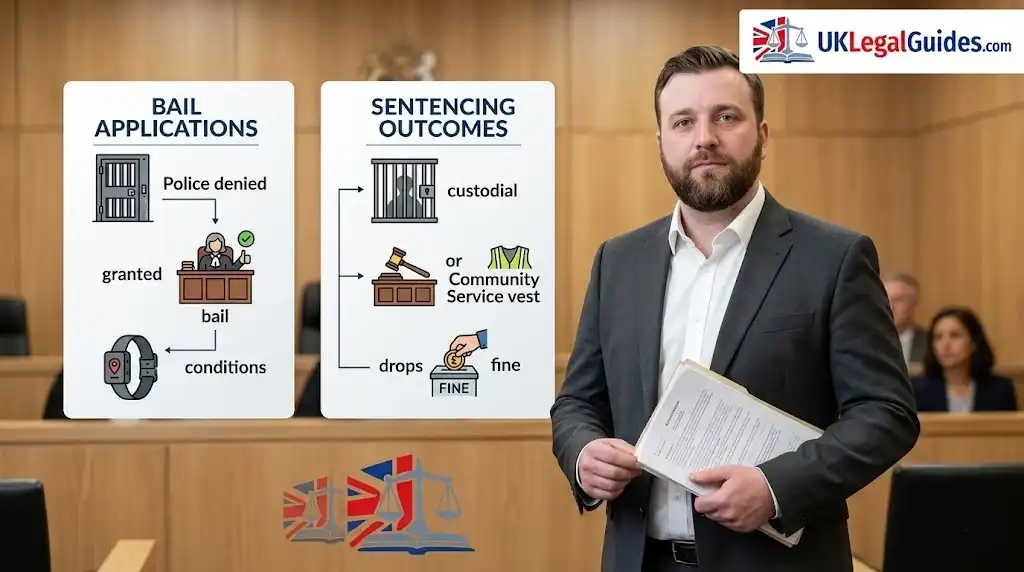
When a person is released on bail in England and Wales, the court or police can attach conditions that restrict movement, including travel inside or outside the United Kingdom. These travel restrictions are an important part of bail law: they are designed to reduce the risk of absconding, ensure defendants attend court, and enable justice to proceed fairly and effectively. This article explains how travel restrictions work in bail, the legal basis for imposing them, what types of travel limits may be applied, how they are enforced, what happens if they are breached, and practical steps for defendants.
What Are Travel Restrictions on Bail?
Travel restrictions are conditions attached to bail that limit a defendant's ability to move freely, especially across borders. Bail conditions are imposed under the Bail Act 1976 and may be applied by police at the pre‑charge stage or by courts after charge. The purpose of any restriction - including travel limits - is to manage risk, safeguard the administration of justice, and ensure the defendant will return for hearings. Courts and police must ensure that any conditions are necessary and proportionate to those aims.
Travel restrictions commonly include:
- Surrender of passports or travel documents to police or the court;
- Prohibition on leaving the United Kingdom without permission;
- Limits on travel outside a specified geographic area within the UK; and
- Requirements to seek prior approval for planned travel.
Legal Basis for Travel Restrictions
Bail Act and Police Powers
Under section 3(6) of the Bail Act 1976, courts and police officers have the power to impose “such conditions” on bail as are **necessary to ensure the defendant surrenders to custody, does not commit further offences, and does not interfere with witnesses or obstruct justice”. Travel restrictions can often be included as one of these conditions where appropriate.
The Policing and Crime Act 2017 also introduced specific provisions making it an offence to breach certain travel‑related bail conditions - for example, conditions that restrict leaving the UK - particularly in the context of terrorism and national security cases.
Immigration Bail
Separate but related travel restrictions may be applied in immigration bail. For individuals released from immigration detention, conditions can include restrictions on travel outside a specified area or outside the UK without prior permission from authorities. These are imposed to prevent absconding and ensure compliance with immigration processes.
Types of Travel Restrictions
Travel restrictions on bail take various forms depending on the case circumstances:
1. Surrender of Passport or Travel Documents
A common restriction is a requirement to surrender passports or other travel documents to police, the court or another specified authority. This prevents a defendant from using those documents to leave the country without prior consent.
Passport surrender is especially likely in cases where the defendant may have strong international ties or where the offences could attract serious penalties, creating a perceived flight risk.
2. No Leaving the United Kingdom
A bail condition can explicitly prohibit a defendant from leaving the UK. This is often reinforced by passport surrender but may also require notification of planned international travel and written permission from the court or police before travel is permitted.
3. Geographic Area Restrictions
Bail conditions may restrict a defendant from leaving a defined area, such as a county, region or police force area, without prior agreement. This type of restriction supports attendance at court and reduces the administrative burden of policing multiple regions.
4. Permission for Specific Travel
In some cases, travel outside the UK or a specific area may be allowed with prior approval. The defendant must apply to the police (for police bail) or the court (for court bail) to vary the condition. Approval may be granted if compelling reasons are shown, such as work commitments, family emergencies or essential travel, and if risks can be mitigated (for example, by security or surety).
How Travel Restrictions Are Applied
At the Point of Granting Bail
When police or a court grants bail, the decision‑maker must assess the defendant's flight risk and other factors such as:
- Severity of the alleged offence;
- Strength of ties to the UK (including family, work and property);
- Previous record of attendance at court; and
- Any evidence of past non‑compliance with bail conditions.
If travel restrictions are necessary and proportionate to those risks, they are formalised in a written bail order or notice.
Passport Handling
Where passport surrender is ordered:
- The defendant must deliver passports and any other travel documents to the authority specified in the bail order, often police custody officers or a designated court official.
- Police and courts retain those documents until the bail period ends or the condition is varied.
- In some high‑profile or exceptional cases, travel for specific purposes may be facilitated by authorised handling of travel documents (for example, temporary return of a passport for essential international travel, followed by re‑surrender).
Enforcement of Travel Restrictions
Monitoring Compliance
Travel restrictions are monitored mainly through administrative and police processes:
- Passport checks may be linked with the Passport Office and border authorities to prevent unauthorised departure.
- Reporting conditions such as regular attendance at a police station help confirm the defendant remains within the required area.
- In some cases, electronic monitoring may be used to support compliance with geographic restrictions.
Border Controls
Border officials may prevent a defendant from leaving the UK if:
- There is an active travel ban condition documented on relevant law‑enforcement systems, or
- Passport or travel documents have been surrendered and the defendant lacks valid documentation for departure.
Breaches and Consequences
Failing to comply with travel restrictions is a serious matter:
Bail Breach and Arrest
- Breaching a travel restriction, including leaving the UK without permission, may lead to arrest and recall to custody.
- Courts may revoke bail or impose stricter conditions, such as denial of further travel.
Offence of Breach
Under the Policing and Crime Act 2017, non‑compliance with certain travel conditions - particularly those preventing leaving the UK - can constitute a criminal offence in specified contexts (for example pre‑charge bail in terrorism cases), punishable by imprisonment, a fine or both.
Impact on Future Bail
A breach negatively affects the defendant's credibility and may reduce the likelihood of bail being granted in future or result in additional enforcement measures, such as curfew or electronic monitoring.
Variations to Travel Restrictions
A defendant may apply to vary travel restrictions if there is a compelling reason, such as:
- Work obligations that require travel;
- Family or medical emergencies; or
- Educational commitments.
Requests to vary must usually be made through:
- Police for police bail conditions; or
- The court that granted bail for court‑imposed conditions.
Court decisions consider whether the variation is justified and whether risk mitigation (e.g. increased surety or reporting) can address concerns.
Common Questions About Travel Restrictions
Does bail automatically prevent travel?
No. Bail itself does not automatically stop travel - restrictions must be expressly included in the bail conditions. If no travel condition exists, the defendant may travel subject to other bail obligations.
Can travel restrictions include areas within the UK?
Yes. Bail conditions can limit travel to within a specified geographic area, such as a police force region.
What happens if I need to travel urgently?
Defendants should seek to vary bail conditions before travel. Emergency travel without approval risks arrest and breach proceedings.
Key Takeaways
Travel restrictions during bail are conditions designed to minimise risk and ensure defendants' attendance in criminal and related proceedings. These may include surrendering passports, no‑leaving‑the‑UK orders, and limits on travel to specified geographic areas. Such conditions must be necessary and proportionate, and defendants must comply fully. Failure to observe travel conditions can lead to arrest, breach proceedings and stricter bail terms. Understanding these rules helps defendants and advisers navigate bail responsibly and avoid serious legal consequences.
