
This guide is maintained as a current resource for September 2026 and covers only the laws of England and Wales. Information is for general guidance, not legal advice. Consult a qualified solicitor for advice specific to your situation.
A comprehensive guide to standard terms in consumer contracts under UK law, explaining what they are, how the Consumer Rights Act 2015 protects consumers from unfair terms, practical examples, legal rights, and what to do if terms are unfair. Understand your rights, responsibilities, and how fairness is assessed in everyday agreements.
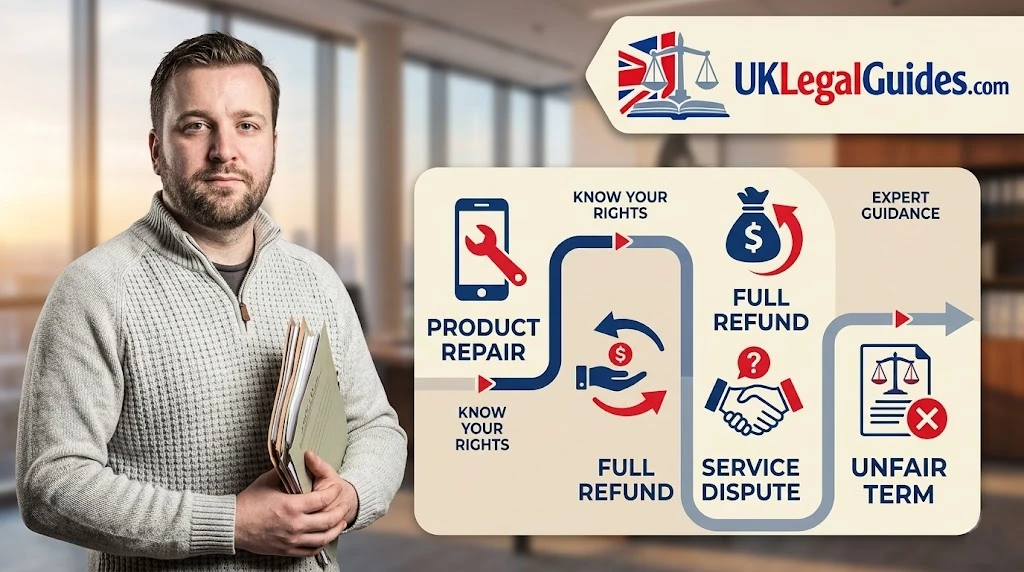
Standard terms appear in most consumer contracts you encounter in daily life - from online purchases to mobile phone agreements and gym memberships. These terms set out the rights and responsibilities of you and the business you're dealing with. In the United Kingdom (England and Wales), the law recognises that consumers often do not have the bargaining power or opportunity to negotiate these terms. As a result, specific protections exist to ensure these terms are fair and transparent. This article explains what standard terms are, how they are treated under UK consumer law, what makes a term unfair, and what steps consumers and businesses should consider if problems arise.
What Are Standard Terms in Consumer Contracts?
Standard terms (also called standard form terms or “small print”) are contractual clauses that a business prepares in advance and uses across a large number of consumer contracts. They are not individually negotiated with each consumer. Common examples include terms concerning:
- Payment and pricing
- Delivery arrangements
- Cancellation or termination rights
- Liability and refunds
- Automatic renewals or changes to services
These terms govern the practical aspects of the relationship between the consumer and the business and are often presented as part of a terms and conditions document or digital agreement you must accept before buying goods or services.
Legal Framework: Consumer Rights Act 2015
The primary law regulating standard terms in consumer contracts in England and Wales is the Consumer Rights Act 2015 (CRA). Since 1 October 2015, the CRA has replaced earlier regulations such as the Unfair Terms in Consumer Contracts Regulations 1999, bringing consumer contract fairness law into a clearer statutory framework.
Under the CRA:
- All consumer contract terms must be fair and transparent.
- If a term is deemed unfair, it is not binding on the consumer.
- The remaining part of the contract continues to apply if it still makes sense without the unfair term.
A consumer contract for these purposes is one between a trader (business) and an individual consumer acting outside their business purposes.
What Does “Unfair” Mean?
A standard term may be unfair if it creates a significant imbalance in the parties' rights and obligations, to the disadvantage of the consumer, in a way that is contrary to the requirement of good faith. Good faith means dealing fairly and openly with consumers.
The assessment of whether a term is unfair involves considering:
- The extent to which the term limits the consumer's legal rights or remedies
- How clearly the term is written
- Whether the term was brought to the consumer's attention
- The context of how and when the contract was agreed
Some terms are exempt from the fairness test if they describe the goods or services being supplied and the price payable, provided they are expressed clearly and prominently.
Examples of Terms That Might Be Unfair
Although fairness depends on the context, the following types of terms have commonly been challenged as unfair:
- Allowing the business to change prices after the contract is agreed without clear justification
- Imposing excessive cancellation charges or automatic loss of upfront payments
- Limiting or excluding a business's liability for poor service, defects, or delays
- Automatically renewing a fixed-term contract with very short notice periods
- Binding consumers to hidden or unintelligible terms in “small print”
- Allowing a business to transfer its contractual rights in a way that reduces consumer benefits
- Terms that mislead the consumer about their legal rights
These examples align with regulatory guidance and industry interpretations of fairness.
Plain Language and Transparency
A key requirement in law is that standard terms must be expressed in plain and intelligible language. This means:
- Avoiding complex legal jargon
- Promoting clarity of meaning
- Highlighting key obligations or limitations
If terms are ambiguous, a court may interpret them in the consumer's favour.
What Happens If a Term Is Unfair?
If a term is found to be unfair:
- It cannot be enforced against the consumer.
- The contract as a whole can continue in force if it is capable of operating without the unfair term.
- Businesses can be challenged by consumers or enforcement bodies such as the Competition and Markets Authority (CMA) and local Trading Standards offices.
- Consumers may bring claims in court or alternative dispute resolution forums if they suffer loss or harm.
Practical Guidance for Consumers
If you believe a standard term in a consumer contract is unfair:
- Read terms carefully before agreeing, particularly cancellation, liability, and renewal clauses.
- Keep records of the terms as presented at the point of agreement.
- Raise concerns directly with the business in writing, explaining why you believe a term is unfair.
- Consider complaints to enforcement bodies such as the CMA or Trading Standards where relevant.
- Seek independent advice from consumer advice services, Citizens Advice, or a solicitor if needed.
Taking steps early may improve the chances of resolving disputes without formal legal action.
Responsibilities for Businesses
Businesses must:
- Ensure their standard terms comply with legal requirements.
- Present terms clearly and in plain language.
- Avoid terms that create imbalanced rights and obligations.
- Regularly review terms and update them in line with legal developments.
- Make key terms prominent so consumers can understand them before entering the contract.
Failing to do so can expose a business to enforcement action and legal challenges from consumers.
Final Thoughts
Standard terms are a fundamental part of consumer contracts in the UK. They help define the commercial relationship between consumers and businesses, but they must be fair, transparent, and accessible. The Consumer Rights Act 2015 provides a robust framework that protects consumers from unfair terms, while still allowing clear, legally compliant contracts to exist. Consumers should familiarise themselves with the terms they agree to, and businesses should adopt plain-language, fair drafting practices to reduce disputes and legal risk.
