
This guide is maintained as a current resource for September 2026 and covers only the laws of England and Wales. Information is for general guidance, not legal advice. Consult a qualified solicitor for advice specific to your situation.
Learn how to get a refund for faulty digital downloads under UK law. Understand your rights to repairs, replacements, and refunds under the Consumer Rights Act 2015.
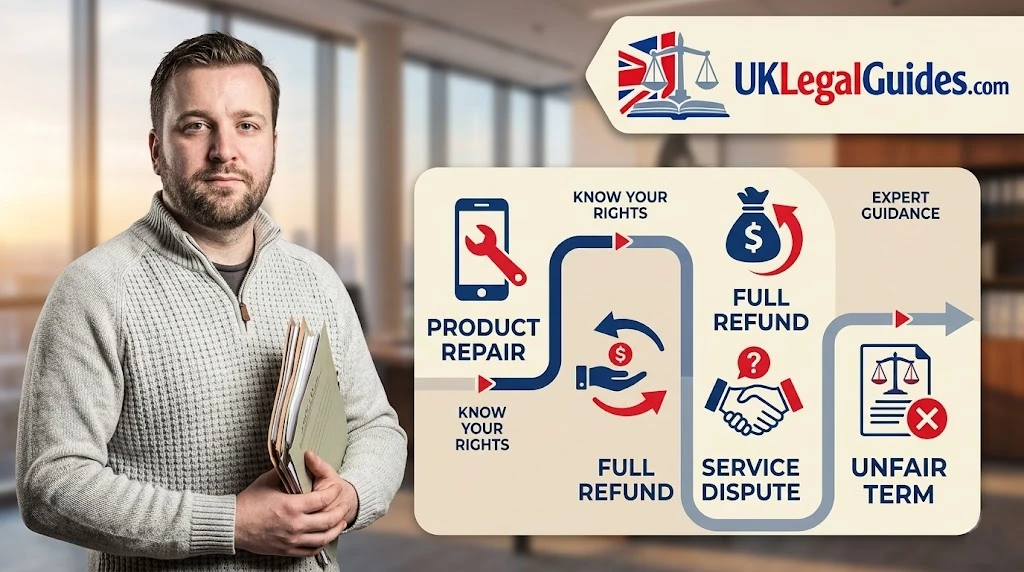
Digital downloads such as apps, games, software, films, music, and e-books are now a routine part of consumer transactions. When these products fail to work properly, the law in England and Wales provides clear protections under the Consumer Rights Act 2015. However, the process for obtaining a refund for digital content differs significantly from that for physical goods.
This guide explains when digital downloads are considered faulty, when a refund is available, and the practical steps consumers can take to pursue a claim. It is designed to provide a clear and structured understanding of the legal position and the processes involved.
What Counts as a Faulty Digital Download?
Digital content must meet specific legal standards. Under the Consumer Rights Act 2015, digital downloads must be:
- Of satisfactory quality
- Fit for purpose
- As described
A digital product may be faulty if:
- A game crashes repeatedly or fails to load
- Software does not install or function correctly
- A film or audio file does not play properly
- The product lacks advertised features or compatibility
If any of these standards are not met, the content is considered in breach of contract.
Key Legal Principle: No Immediate Right to Reject
Unlike physical goods, there is generally no automatic right to reject digital downloads for a refund once they have been accessed or downloaded.
Instead, the law provides a structured system of remedies:
- Repair or replacement (primary remedy)
- Price reduction or refund (secondary remedy)
This reflects the nature of digital content, which cannot easily be “returned”.
Step 1: Request a Repair or Replacement
Before a refund can usually be claimed, the consumer must give the trader an opportunity to fix the problem.
What This Involves
The trader must:
- Repair the digital content (e.g. provide a patch or update), or
- Replace it with a working version
This must be done:
- Within a reasonable time
- Without significant inconvenience
- At no cost to the consumer
Practical Examples
- A faulty app is updated to remove bugs
- A corrupted download is replaced with a working version
- A software licence is reissued
Step 2: When You Can Claim a Refund
You can seek a refund if:
- Repair or replacement is impossible, or
- The trader fails to fix the issue within a reasonable time, or
- The solution causes significant inconvenience
In these situations, the law allows a price reduction, which may be a full refund.
Full vs Partial Refund
- A full refund may be available if the content is unusable
- A partial refund may apply if only part of the content is faulty
Step 3: Refund Rules and Timeframes
If a refund is agreed:
- It must be issued without undue delay
- It must be provided within 14 days of agreement
- It must use the original payment method unless agreed otherwise
- No fees can be charged for issuing the refund
These rules ensure consumers receive prompt and fair reimbursement.
Cooling-Off Period for Digital Downloads
Separate from fault-based rights, consumers may have a 14-day cancellation period for online purchases.
However:
- This right is usually lost once downloading or streaming begins, if the consumer agreed to immediate access
This means most refund claims for digital downloads rely on fault-based rights rather than cancellation rights.
Step-by-Step Guide to Claiming a Refund
1. Identify the Fault
Clearly establish how the digital download:
- Fails to work
- Does not match its description
- Is incompatible with your device
2. Gather Evidence
Collect supporting materials such as:
- Purchase receipts or confirmation emails
- Screenshots or error messages
- Product descriptions or advertisements
3. Contact the Trader
Write to the supplier (e.g. app store, platform, or retailer):
- Explain the issue clearly
- Request a repair or replacement
- Refer to your rights under the Consumer Rights Act 2015
4. Allow Time for Resolution
The trader must be given a reasonable opportunity to fix the issue.
5. Escalate to a Refund Request
If the issue is not resolved:
- Request a price reduction or full refund
- State why repair or replacement has failed or is unsuitable
6. Take Further Action if Necessary
If the trader refuses:
- Use the company's formal complaints process
- Consider Alternative Dispute Resolution (ADR)
- Issue a claim through the County Court if appropriate
Compensation for Damage Caused by Digital Content
If faulty digital content causes damage, additional remedies may apply.
Examples
- Malware damaging a computer
- Software corrupting files or data
In such cases, the trader must:
- Repair the damage, or
- Provide compensation
This right can apply even where the digital content was free, if negligence is involved.
Who Is Responsible for the Refund?
The responsible party is usually:
- The retailer or platform you purchased from (e.g. app store), or
- The supplier named in the contract
Consumers should identify who they contracted with before making a claim.
Time Limits for Bringing a Claim
Consumers generally have up to six years to bring a claim for breach of contract in England and Wales.
However:
- Claims should be made promptly
- Evidence becomes harder to obtain over time
Common Issues in Digital Refund Claims
Platform Policies vs Legal Rights
Retailers may have their own refund policies, but these cannot override statutory rights.
Compatibility Disputes
Disagreements often arise over whether the consumer's device meets requirements.
Ongoing Software Updates
A trader may argue that future updates will resolve issues.
Partial Faults
Where only part of a product is defective, disputes may arise over refund value.
Common Questions from our Readers
Can I get a refund for a faulty digital download?
Yes, but usually only after repair or replacement has been attempted or is not possible.
Can I refuse a repair and demand a refund?
Generally no. The trader has the right to attempt a repair or replacement first.
How long does a refund take?
It must be issued within 14 days of agreement.
What if the digital product only partly works?
You may be entitled to a partial refund reflecting the reduced value.
Risks and Practical Considerations
- Loss of cancellation rights after download
- Difficulty proving software faults
- Dependence on updates from the supplier
- Jurisdiction issues with overseas sellers
Maintaining clear documentation and acting promptly can significantly improve the chances of a successful claim.
Final Thoughts
Obtaining a refund for faulty digital downloads involves a structured legal process under the Consumer Rights Act 2015. The key points are:
- Digital content must meet standards of quality, fitness, and accuracy
- Consumers must usually request a repair or replacement first
- A refund becomes available if that process fails or is not feasible
- Refunds must be issued promptly and fairly
- Additional compensation may apply if damage is caused
Understanding these rights enables consumers to challenge faulty digital products effectively and ensures traders meet their legal obligations.
