
This guide is maintained as a current resource for September 2026 and covers only the laws of England and Wales. Information is for general guidance, not legal advice. Consult a qualified solicitor for advice specific to your situation.
Understand implied terms in consumer contracts under UK law. This guide explains how statutory protections under the Consumer Rights Act 2015 apply to goods, services and digital content, what standards traders must meet, how breaches are remedied, and practical steps consumers can take to protect their rights in England and Wales.
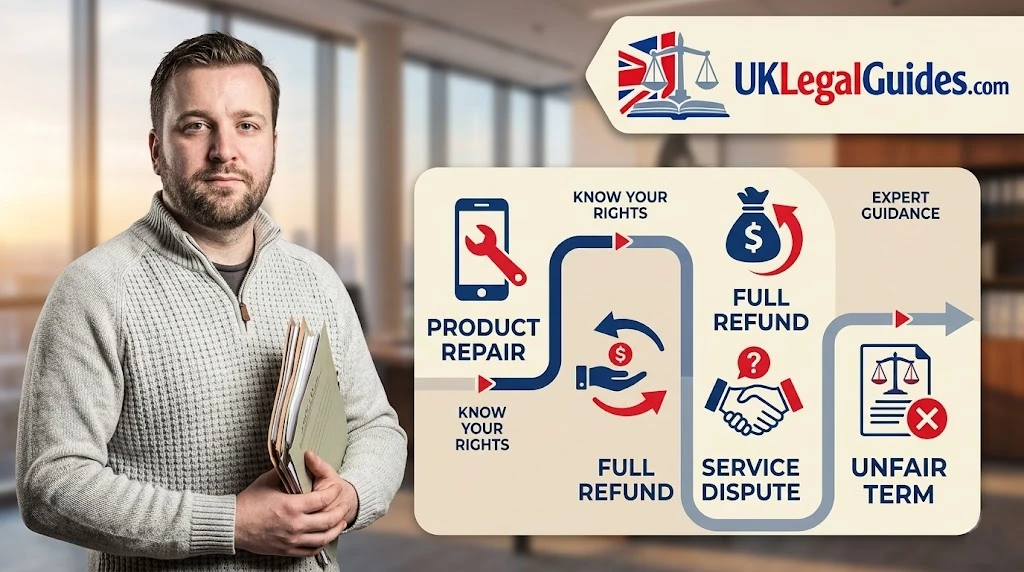
Consumer contracts are the legal agreements between individuals and businesses when goods, services or digital content are purchased. In many everyday transactions, parties focus on the express terms - the price, delivery date, and what is being purchased. However, English law also reads in certain implied terms that are not expressly stated but form part of the contract itself. These implied terms play a vital role in protecting consumers and ensuring fairness in the marketplace.
This guide explains what implied terms are, why they matter in consumer contracts under UK law, where they come from, how they affect rights and disputes, and what practical steps consumers should consider when asserting their rights.
What Are Implied Terms?
An implied term is a provision that the law treats as part of a contract even though it is not written down or expressly agreed by the parties. Such terms fill gaps to ensure the contract functions effectively or to provide statutory protection when one party (typically the consumer) is in a weaker bargaining position.
In a consumer contract, implied terms sit alongside the express contractual terms. Together they create the full set of obligations and rights that govern the transaction. If an implied term is breached, this may give rise to legal remedies such as a refund, repair, replacement, price reduction or compensation.
Sources of Implied Terms in Consumer Contracts
Implied terms in UK contract law arise from several sources, but in the consumer context the key source is statute - particularly the Consumer Rights Act 2015.
1. Statutory Implied Terms under the Consumer Rights Act 2015
The Consumer Rights Act 2015 (CRA) is the principal law governing consumer contracts for goods, digital content and services in England and Wales. It implies baseline standards into every consumer contract, and many of these terms cannot be excluded by contract terms.
Goods
For consumer contracts for the sale of goods, the CRA implies that:
- Goods must be of satisfactory quality – free from defects and meet the standard that a reasonable person would expect.
- Goods must be fit for purpose – able to perform the purpose the consumer made known to the trader.
- Goods must match the description given by the trader.
These implied terms apply regardless of whether they are written into a contract or stated in marketing materials. A failure to meet these standards may allow the consumer to reject the goods, seek a refund, or claim a price reduction or replacement.
Digital Content
The CRA also applies implied standards to digital content such as apps, e‑books or downloads. Digital content must generally be of satisfactory quality, fit for purpose, and as described - similar in principle to physical goods.
Services
Where a consumer purchases services, the CRA implies that:
- Services must be performed with reasonable care and skill.
- Where the price has not been explicitly agreed, it must be reasonable.
- If no time for performance is set, the service must be performed within a reasonable time.
These terms provide core standards for consumer expectations in day‑to‑day transactions such as home repairs, cleaning services, or professional advice.
Why Implied Terms Matter in Consumer Law
Implied terms ensure that the basic expectations of consumers are protected even if a contract says little or nothing about quality, performance or timeframes. These protections apply automatically and cannot generally be removed by contract wording in consumer agreements.
For example, a written or online contract promising a “no refund” policy cannot override the statutory implied terms that goods must be of satisfactory quality, fit for purpose and as described. If the goods fall short, the consumer may still be entitled to remedies under the CRA.
In addition to statutory implied terms, courts can sometimes imply terms in fact to reflect what the parties must have intended where the contract would otherwise fail to operate practically. However, this is less common in standard consumer contracts where statutory protections are designed to cover most practical scenarios.
How Implied Terms Interact with Express Terms
Implied terms operate alongside express terms in a contract. If express and implied terms conflict, courts generally give weight to their interpretation and to the statutory protections underpinning consumer law. Express terms cannot lawfully exclude mandatory statutory implied terms in consumer contracts.
For example, if a written contract for the sale of consumer goods promises delivery within 14 days but the goods delivered do not match the description, the implied term under the CRA that goods must correspond with the description still applies. The consumer may be entitled to remedies under the implied terms even if the express terms address only delivery.
Common Examples of Implied Terms
Examples of how implied terms operate in everyday consumer situations include:
- Online purchases: A laptop bought online must work as advertised, be fit for computing purposes, and arrive in satisfactory condition.
- Home services: A plumber's contract to repair a leak implicitly includes a term that the work will be carried out with reasonable care and skill.
- Digital purchases: A downloaded software application must function according to the description provided at the time of sale.
In each case, the implied terms provide consumer protections even if not mentioned in written or verbal contract terms.
Remedies for Breach of Implied Terms
When an implied term is breached, consumers may have several options:
- Short‑term rejection: Consumers have a 30‑day right to reject faulty goods for a refund under the CRA.
- Repair or replacement: If goods are faulty, consumers can require the trader to repair or replace them.
- Price reduction or final rejection: After the initial 30‑day period, consumers can seek a price reduction or final rejection leading to a refund.
For services, if performance falls below the standard required by implied terms (for example, not carried out with reasonable care), consumers may claim compensation for losses.
Time Limits and Disputes
Where remedies or claims arise from implied terms, consumers should be mindful of time limits:
- For goods, the statutory right to reject faulty goods generally applies within a short time frame (e.g. 30 days).
- If a dispute progresses to a claim in court or tribunal for breach of implied terms, statutory limitation periods (often six years for breach of contract) may apply from the date of breach.
Acting promptly when defects or issues arise helps preserve rights and supports stronger evidence for disputes.
Practical Steps for Consumers
Consumers can take practical steps to reinforce their rights under implied terms:
- Keep records: Retain receipts, order confirmations, descriptions and any communications with traders.
- Document defects: Photographs or videos of faulty goods or services not performed to a reasonable standard can support claims.
- Communicate clearly: Notify the trader in writing of the issue and state the specific statutory rights under the CRA.
- Seek advice: Organisations such as Citizens Advice provide guidance on implied terms and consumer disputes.
Conclusion
Implied terms are a fundamental part of consumer contract law in England and Wales. Created by legislation such as the Consumer Rights Act 2015, these terms guarantee baseline standards of quality, fitness for purpose, description and performance - whether or not they are expressly stated in a contract. Through these protections, the law aims to balance contractual fairness and protect consumers in everyday transactions.
Understanding implied terms helps consumers recognise when their rights have been breached and take appropriate action, whether through negotiation, complaints or formal claims. Because statutory protections cannot usually be excluded in consumer contracts, knowing how implied terms work gives consumers essential legal leverage in disputes.
