
This guide is maintained as a current resource for September 2026 and covers only the laws of England and Wales. Information is for general guidance, not legal advice. Consult a qualified solicitor for advice specific to your situation.
Learn how bail is set for juvenile defendants in England and Wales. This detailed guide explains the legal framework, court and police bail decisions, conditions for young people, welfare considerations and what happens if bail is refused or breached.
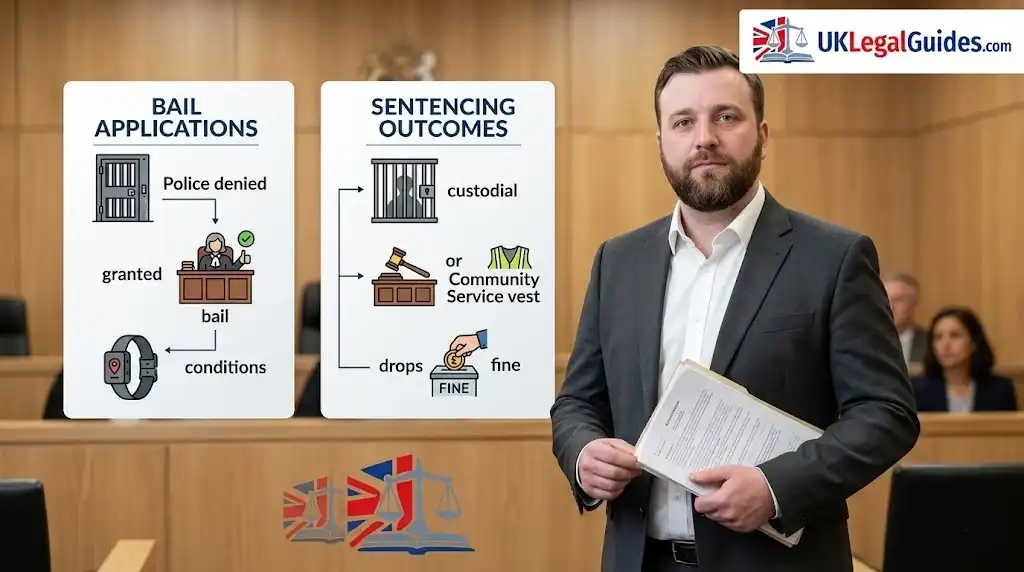
Bail is a legal mechanism that allows a person accused of a criminal offence to be released from detention while they await further proceedings. For juvenile defendants – that is, individuals aged under 18 – the legal framework and practical approach to bail in England and Wales reflect both the general principles of criminal justice and additional safeguards to protect the welfare of children. This article explains how bail is set for juvenile defendants, the legal tests applied, typical conditions, and what happens if bail is refused or breached. The goal is to provide a clear and practical guide for parents, guardians, students, solicitors and members of the public.
What Does “Juvenile Defendant” Mean?
In the context of the criminal justice system in England and Wales, a juvenile defendant is anyone aged under 18 on the date of arrest or charge. The term covers all young people appearing before the police or courts as suspects or defendants.
The Legal Basis for Bail
The starting point for bail, whether for adults or juveniles, is the Bail Act 1976. This statute creates a general right to bail for most defendants, including children, unless specific exceptions apply. Despite this general right, courts and police must always consider the child's welfare and best interests, consistent with wider children's law principles.
Bail Decisions at the Police Stage
When Police Consider Bail for a Child
When a child is arrested, the police must decide whether to release them on bail or detain them pending further steps in the process. This decision occurs after:
- Initial arrest and interview assessment; or
- Ongoing investigations where charges are pending.
At this stage, bail can be pre‑charge bail (to allow investigations to continue) or post‑charge bail (after the child has been charged but before their first court hearing).
Welfare Considerations
Police must ensure that the child:
- is not held longer than necessary in custody;
- has an appropriate adult with them during police procedures;
- understands any bail conditions imposed.
If bail is refused, the police must take steps to move the child into local authority accommodation rather than detain them unnecessarily.
Bail Decisions in Court
Once a juvenile defendant is charged and appears before a youth court (a magistrates' court sitting to hear youth cases), the court will make a bail decision at the first hearing and at any subsequent hearing where bail or remand is considered.
Presumption in Favour of Bail
Under the Bail Act 1976, children have the same general right to bail as adults. The court must presume in favour of bail unless one or more lawful exceptions apply. These exceptions include cases where there is a real risk that the child would:
- Fail to attend court at the required time;
- Commit further offences if released;
- Interfere with witnesses or obstruct justice;
- Cause harm to themselves or others.
Bail Conditions for Juvenile Defendants
Types of Bail
The court may grant:
- Unconditional bail – the child is free to go with only a requirement to attend court on the set date; or
- Conditional bail – restrictions are attached to manage risk and support compliance.
Common Bail Conditions
Conditions attached to juvenile bail may include:
- Reporting requirements – attend a police station or youth justice service at set times;
- Residence conditions – live at a specified address or with specified carers;
- Curfews – remain at home during certain hours;
- Non‑contact orders – not to contact victims, witnesses, or co‑defendants;
- Bail supervision and support – structured support through a Youth Justice Service (YJS).
Bail Supervision and Support
Youth Justice Services (YJSs) play an important role in bail decisions for children. In cases where there are concerns about risk or welfare, the YJS may prepare a bail supervision and support package. This is a tailored plan involving supervision, access to education or training and support designed to address concerns while the child remains at liberty.
Electronic Monitoring
In certain circumstances, the court may attach electronic monitoring conditions (for example, an electronic tag). However, this can only be used when:
- The child is aged 12 or older; and
- The offence meets specified criteria (for example, serious or violent crimes) with appropriate arrangements and suitability confirmed by the youth offending team.
Electronic monitoring is a more restrictive condition and courts balance the child's liberty with public safety and welfare considerations.
What Happens If Bail Is Refused?
Remand to Local Authority Accommodation
If the court refuses bail, the first step is usually to remand the child to local authority accommodation rather than custodial detention. Local authorities have a statutory duty to provide suitable accommodation for such children.
Remand to Youth Detention Accommodation
Only if there is a clear legal basis and higher risk – for example, where the offence is serious, and no community measures can address the risks – may a court remand a child to youth detention accommodation (custody). Even then, the court must consider the child's welfare and set out clear reasons for such a decision.
What Happens If Bail Conditions Are Breached?
Breaching bail conditions for a juvenile can have serious consequences, including:
- Referral back to court;
- Bail being revoked;
- Potential remand to accommodation pending further hearing.
The aim is to strike a balance between ensuring compliance and supporting the child's welfare.
Key Takeaways
Setting bail for juvenile defendants in England and Wales involves a careful legal process focused on both the rights of the child and public safety. Key points include:
- Children have a general right to bail under the Bail Act 1976, subject to lawful exceptions.
- Police and courts must consider welfare and developmental needs, alongside risk and attendance concerns.
- Conditions attached to bail can include supervision, curfews and residence requirements, with structured support packages often playing a central role.
- When bail is refused, children are normally remanded to local authority accommodation, with custodial remand only in exceptional cases.
Understanding these principles can help families, legal practitioners, and the public make sense of how the justice system applies bail to defendants who are under 18.
