
This guide is maintained as a current resource for September 2026 and covers only the laws of England and Wales. Information is for general guidance, not legal advice. Consult a qualified solicitor for advice specific to your situation.
Learn about the most common leasehold disputes in England and Wales, including service charges, ground rent, repairs, and tribunal claims. A clear, practical guide to your legal rights and options.
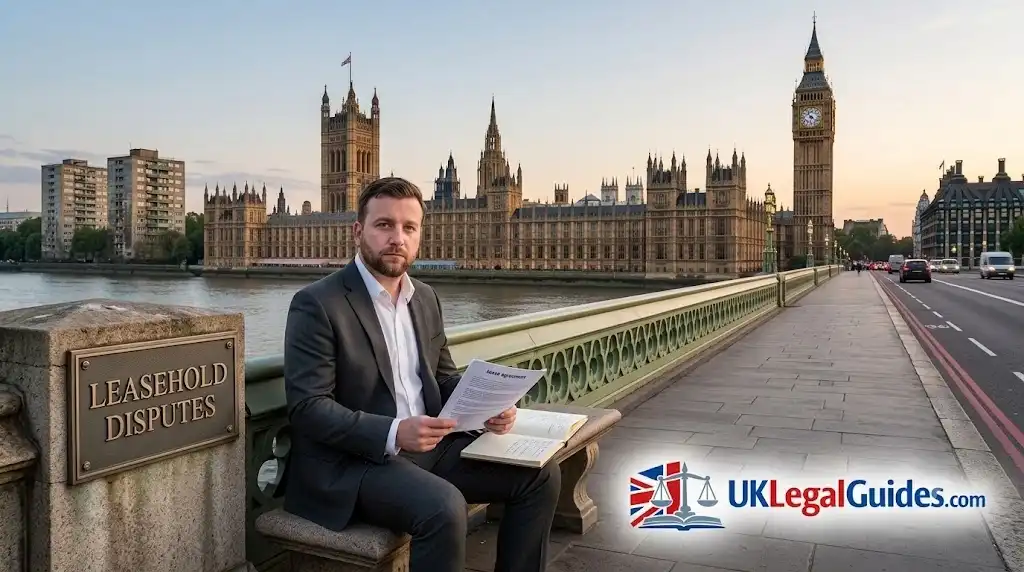
Leasehold ownership remains a common form of property ownership in England and Wales, particularly for flats. While it allows individuals to occupy and use a property for a fixed period, it also creates an ongoing legal relationship between the leaseholder and the freeholder (landlord). This relationship is governed by a lease-a legally binding contract-which often gives rise to disputes.
Understanding the most common leasehold disputes is essential for anyone buying, owning, or managing leasehold property. This guide explains the key types of disputes, the legal framework behind them, and the practical steps available to resolve issues.
Understanding Leasehold Disputes
A leasehold dispute arises when there is a disagreement between a leaseholder and a freeholder, managing agent, or other leaseholders about rights, obligations, or costs under the lease.
Common disputes typically relate to:
- Money (such as service charges or ground rent)
- Property management and maintenance
- Rights and restrictions in the lease
- Legal processes such as lease extensions or enfranchisement
Many of these disputes are resolved through negotiation or mediation, but some proceed to a tribunal. In England, most formal disputes are handled by the First-tier Tribunal (Property Chamber), which deals with matters such as service charges, lease variations, and breaches of lease.
Service Charge Disputes
What are service charges?
Service charges are payments made by leaseholders to cover the cost of maintaining and managing the building. These may include:
- Repairs and maintenance
- Building insurance
- Cleaning and lighting of communal areas
- Management fees
Common problems
Service charges are the most frequent source of leasehold disputes. Issues often include:
- Overcharging or unreasonable costs
Leaseholders may be billed excessive amounts or charged for services not actually provided. - Lack of transparency
Freeholders or managing agents may fail to provide clear accounts or supporting invoices. - Charges outside the lease terms
A landlord cannot recover costs unless the lease allows it. - Poor-quality works or services
Disputes often arise where repairs are substandard or unnecessary.
Legal position
Service charges must be:
- Reasonable in amount
- Properly demanded
- Permitted under the lease
Leaseholders have the right to request detailed accounts and can challenge charges at a tribunal if necessary.
Ground Rent Disputes
Ground rent is a payment made to the freeholder for the land on which the property stands.
Common issues
- Unreasonable increases (particularly escalating ground rent clauses)
- Lack of clarity in lease terms
- Disputes over whether rent is payable or correctly demanded
In some cases, leaseholders may challenge increases if they exceed what is allowed by the lease or are considered unfair.
Administration Charges and Hidden Fees
Leaseholders are often required to pay administration charges for:
- Permissions (e.g. alterations)
- Providing documents
- Late payment fees
These charges can lead to disputes where they are:
- Excessive
- Not clearly defined in the lease
- Poorly explained
Under the law, administration charges must be reasonable and can be challenged at a tribunal.
Repairs, Maintenance, and Building Condition
Another major source of disputes concerns responsibility for repairs.
Typical issues include:
- Failure by the landlord to carry out repairs
- Delays in essential maintenance
- Buildings falling into disrepair
- Disagreements about whether work is necessary
In some cases, leaseholders may argue that high costs could have been avoided if the landlord had maintained the building properly.
Major Works and Consultation Disputes
Landlords must usually consult leaseholders before carrying out major works that exceed certain cost thresholds.
Disputes arise when:
- Consultation procedures are not followed
- Costs are significantly higher than expected
- Leaseholders feel works are unnecessary
Failure to consult properly can limit the amount a landlord can recover from leaseholders.
Breach of Lease and Covenant Disputes
A lease sets out obligations (known as covenants) for both parties.
Common breaches include:
- Leaseholders making alterations without consent
- Subletting without permission
- Noise complaints or nuisance
- Landlords failing to meet management obligations
Disputes in this area often involve enforcement action or applications to a tribunal.
Lease Extension and Enfranchisement Disputes
Leaseholders have statutory rights to:
- Extend their lease
- Purchase the freehold (collectively or individually in some cases)
Disputes commonly involve:
- The premium (price) payable
- Valuation disagreements
- Eligibility criteria
These disputes are frequently determined by a tribunal if agreement cannot be reached.
Right to Manage (RTM) Disputes
Leaseholders may exercise the Right to Manage, allowing them to take control of building management without buying the freehold.
Disputes can arise over:
- Whether RTM requirements are met
- The transfer of management responsibilities
- Ongoing management disagreements
Insurance Disputes
Freeholders usually arrange building insurance and recover the cost through service charges.
Disputes may involve:
- Excessive premiums
- Lack of competitive quotes
- Inadequate cover
Leaseholders can challenge insurance costs if they are unreasonable or not in line with the lease.
Legal Process for Resolving Leasehold Disputes
1. Informal Resolution
The first step is usually to:
- Contact the landlord or managing agent
- Request clarification or evidence
- Attempt negotiation
2. Mediation
Mediation involves an independent third party helping both sides reach agreement. It is often faster and less expensive than formal proceedings.
3. Tribunal Application
If the dispute cannot be resolved, leaseholders can apply to the First-tier Tribunal (Property Chamber).
The tribunal can decide on:
- Service and administration charges
- Lease interpretation
- Appointment of a manager
- Breaches of lease
4. Court Proceedings
Some disputes, particularly complex or high-value claims, may proceed to court, especially where enforcement or compensation is sought.
Time Limits and Risks
Time limits
- Claims relating to service charges may be affected by limitation periods (typically six years for contractual claims)
- Delay can weaken a case or limit recovery
Risks
- Legal costs can be significant, although tribunal costs are generally lower than court proceedings
- Some leases allow landlords to recover legal costs through service charges
- Non-payment of charges can lead to enforcement action, including forfeiture in serious cases
Practical Tips for Leaseholders
- Read your lease carefully before purchasing or disputing any issue
- Keep records of all correspondence and payments
- Request breakdowns of any charges
- Act promptly if you believe a charge or decision is unfair
- Seek guidance from independent organisations before escalating disputes
Common Questions About Leasehold Disputes
Can I refuse to pay a service charge?
You may dispute a charge, but outright refusal to pay can lead to legal action. It is often safer to challenge the charge formally.
What if the landlord ignores my complaint?
You can escalate the matter to a tribunal if informal efforts fail.
Are leasehold disputes common?
Yes. Disputes-particularly over service charges-are widespread due to the complexity of lease agreements and the financial obligations involved.
Final Thoughts
Leasehold disputes in England and Wales commonly arise from financial disagreements, management issues, and differing interpretations of lease terms. Service charges, ground rent, repairs, and administration fees are among the most frequent sources of conflict.
The law provides structured mechanisms to resolve disputes, including negotiation, mediation, and tribunal proceedings. Understanding your rights and obligations under the lease is essential to managing risks and resolving issues effectively.
Leaseholders who stay informed, keep accurate records, and act promptly are better positioned to protect their interests and achieve fair outcomes.
